leaf icon
leaf icon
leaf icon
calendar icon
Gardens To Visit
caret icon
Visit a PHS garden or landscape to help build stronger social connections with your community.
For Neighborhoods
caret icon
Explore programs that create healthy, livable environments and increase access to fresh food.
For Gardeners
caret icon
Engage with PHS on gardening, whether you’re an expert or a beginner.
About Us
caret icon
Get to know our story, become a part of our staff, or see what is in the news with PHS.
The Flower Show

Growing Hollies for Beauty, Wildlife, and Winter Interest

December 11, 2025

leaf icon garden inspiration

leaf icon plant care

leaf icon seasonal tips

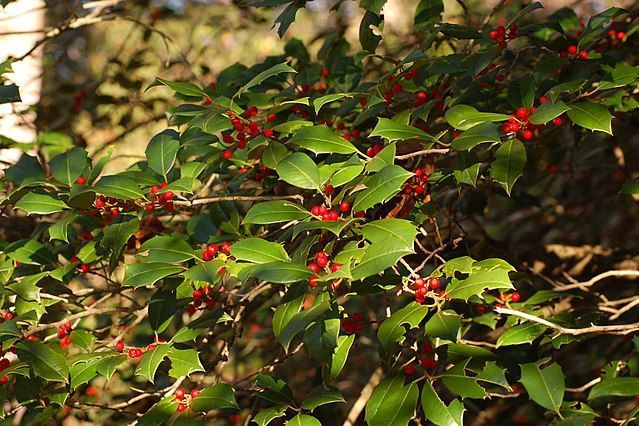
american holly ilex opaca branch 3008px

By Andrew Bunting, PHS VP of Horticulture 

We are fortunate in the Mid-Atlantic to be able to grow a vast diversity of hollies, whether it is a stately holly tree, a compact holly plant, or even low-maintenance holly bushes. Hollies, part of the genus Ilex, comprise more than 400 species worldwide and hundreds, if not thousands, of cultivars. In the coastal plain, from the Delaware Valley east to the New Jersey shore, we begin to see some of the native and local diversity of hollies, including the American holly, Ilex opaca; winterberry, Ilex verticillata; and the inkberry holly, Ilex glabra. 

Many hollies have evergreen leaves and red, orange, or yellow fruits throughout winter. They make exceptional garden and landscape plants, particularly for winter interest, and are also well-loved for holiday wreaths, swags, and cut branches used to embellish winter containers and window boxes. 

ilex nellie r stevens
Ilex 'Nellie R Stevens'

What to Know Before You Grow Hollies 

It is essential to recognize that hollies are dioecious, meaning there are separate male and female plants. If your female holly isn’t fruiting, chances are a male plant isn’t close enough to allow bees to transfer pollen in spring. 

Most Ilex species are evergreen, but there are also many highly ornamental deciduous species, such as winterberry, Ilex verticillata. Most hollies prefer well-drained, acidic soils, though winterberry and inkberry can tolerate moist to wet conditions. They are perfectly hardy in the Mid-Atlantic, thriving in USDA zones 5–9, and generally require very little pruning. 

Evergreen hollies can be harvested for winter greens, which naturally helps shape the plants over time. Ilex verticillata is stoloniferous (suckering), meaning it expands through underground stems and will gradually form a large mass or thicket. As the plant matures, periodic thinning may be needed to maintain its structure and size.  

Most hollies thrive in sun to part sun, though the American holly, Ilex opaca, naturally grows as an understory holly tree in considerable shade. They are largely pest-free, though occasional issues include the insects Holly Leaf Miner or Holly Berry Gall Midge. 

Ready to feel more confident in the garden? Join our Know to Grow webinars for expert tips and guidance!

ilex opaca satyr hill 1
Ilex opaca "Satyr Hill'

Native Evergreen Hollies 

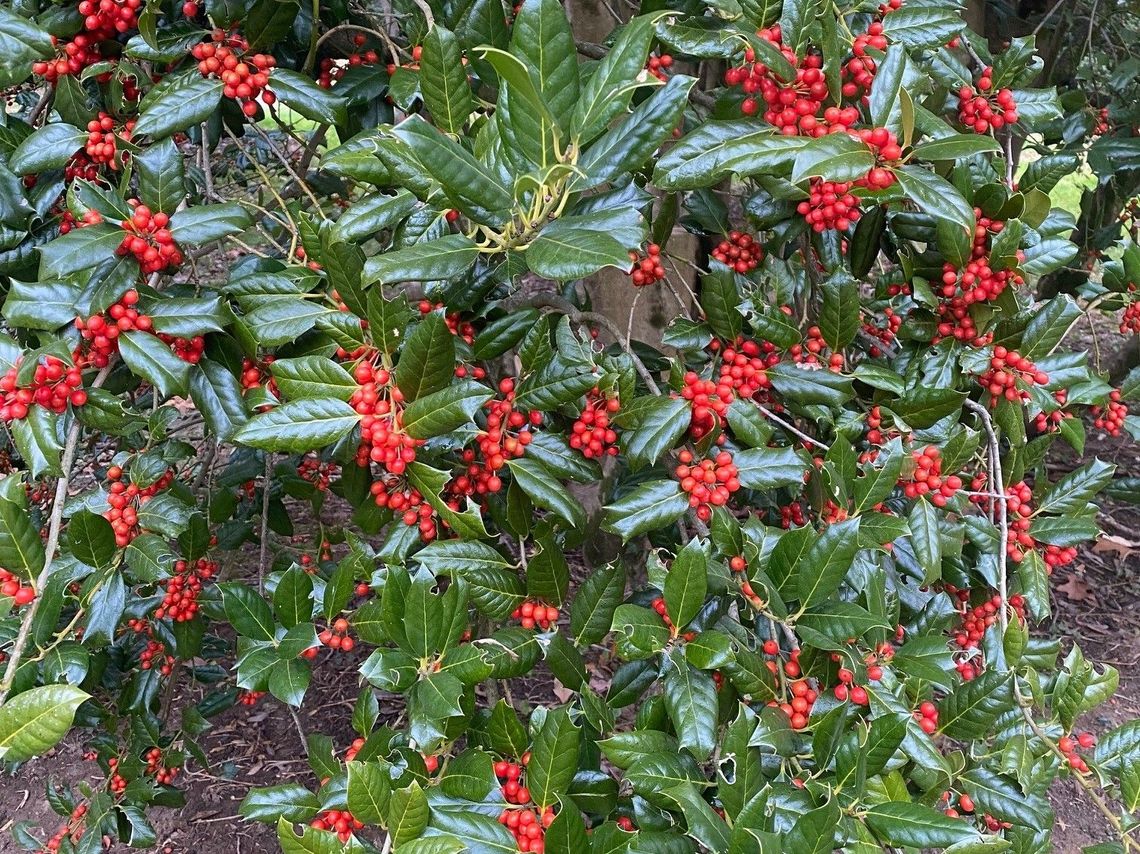
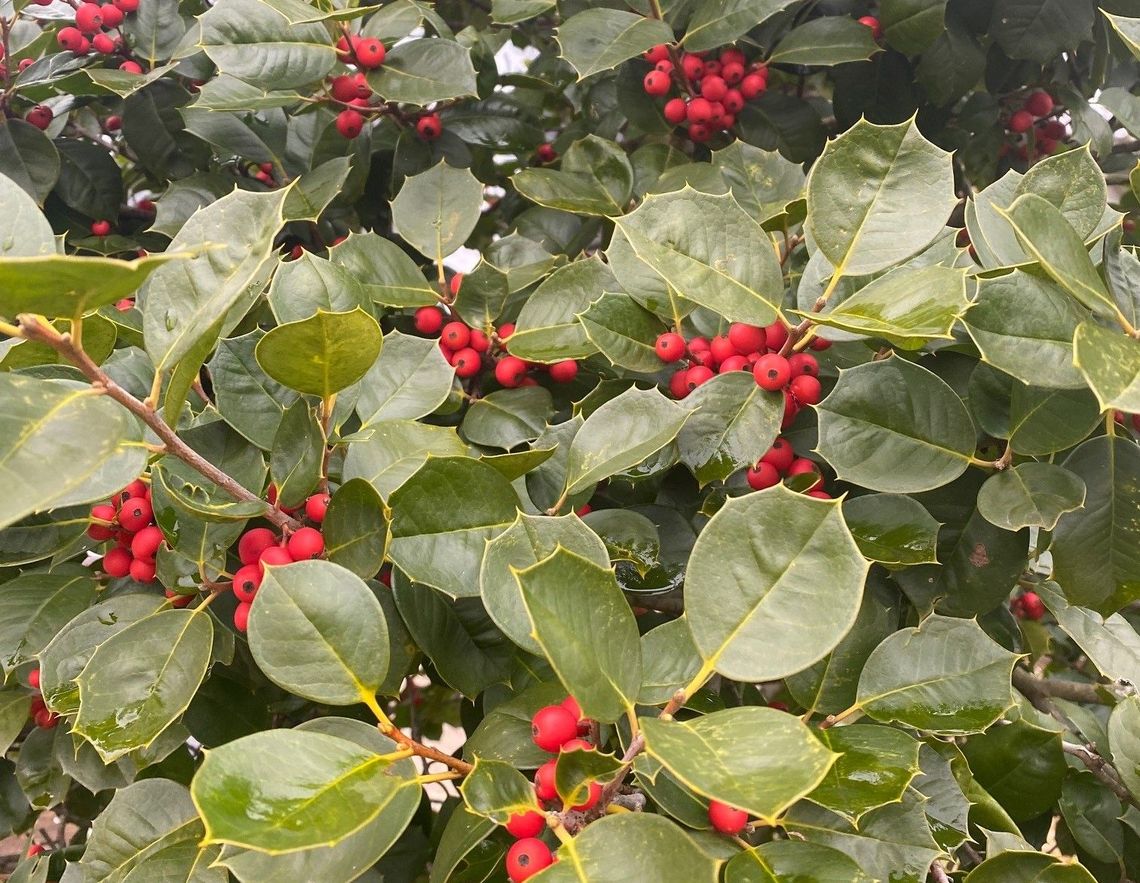
One of the finest native evergreen hollies, and one of the most iconic holly trees, is the American holly, Ilex opaca. In its native habitat, it grows in the Pine Barrens of New Jersey and in lowland coastal plain areas on the Pennsylvania side of the Delaware River. At maturity, it forms a tall pyramidal tree reaching 50–60 feet. 

The cultivar, ‘Satyr Hill’ received the PHS Gold Medal Plant Award for exceptional fruits and foliage. Good male pollinators include ‘Jersey Knight’ and ‘John Wister’. ‘Jersey Princess’ is another exceptional female clone that was developed in Dr. Elwin Orton’s breeding program at Rutger’s University. For smaller gardens, Ilex opaca ‘Maryland Dwarf’ offers a more shrub-like habit and has become increasingly popular. All American hollies show notable deer resistance. 

A closely related hybrid is Foster holly, Ilex × attenuata ‘Foster #2’, which resembles a narrower, more upright American holly. ‘Sunny Foster’ features bright yellow foliage tips in winter, and ‘Longwood Gold’ bears yellow fruit. 

As alternatives to boxwood, consider compact inkberry holly bushes, Ilex glabra, such as ‘Shamrock’, Gem Box®, and Strongbox®, the latter two promoted as boxwood blight–resistant substitutes. 

All native hollies contribute significantly to ecological functions. Their fruits feed birds such as American Robins, Gray Catbirds, and Mockingbirds, and the dense evergreen structure provides habitat for numerous nesting birds. 

ilex x koehneana agena
Ilex x koehneana 'Agena'

Classic Winter Display 

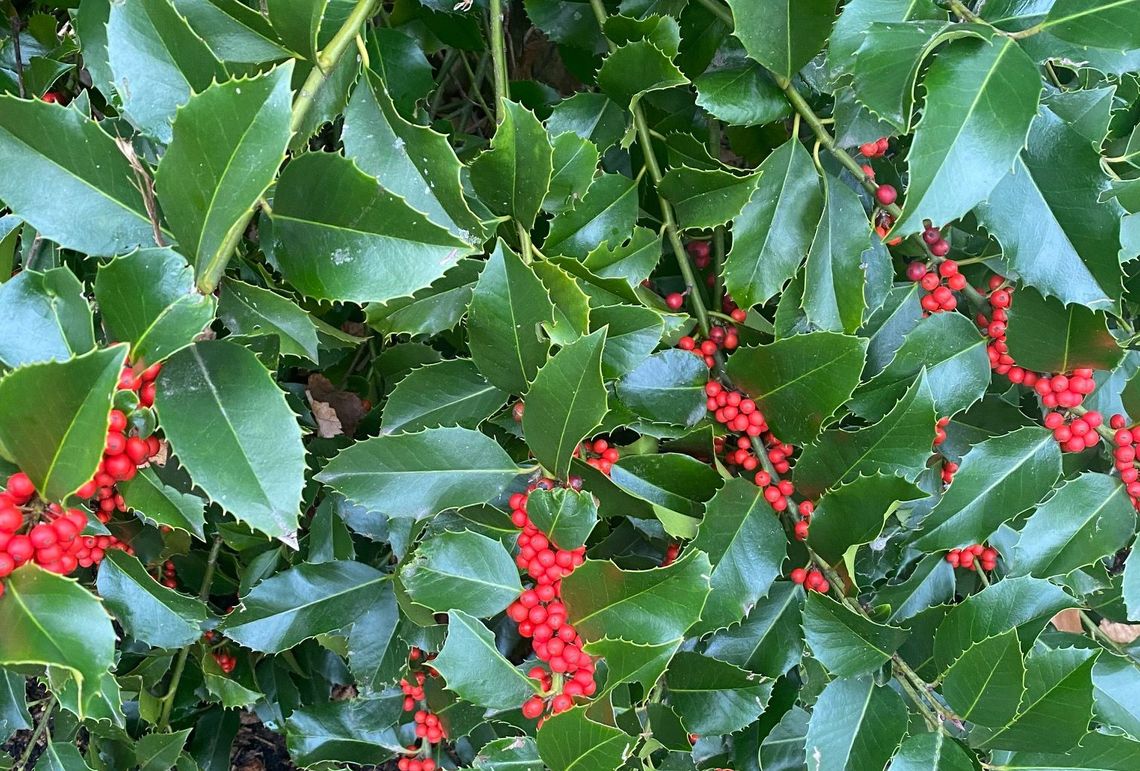
The classic holly that many love has shiny leaves with sharp spines and bright red berries. This comes from the English holly, Ilex aquifolium and hybrids such as Ilex × altaclerensis and Ilex × koehneana. In the mid-1980s, these holly plants were considered marginally hardy in southeastern Pennsylvania, often dying back after cold winters. Today, thanks in part to warmer winters, many thrive throughout the Mid-Atlantic. 

English hollies differ from American hollies in their glossy leaves, compared to the American holly’s softer, matte foliage. A hardier substitute for traditional English holly is Koehne holly, Ilex × koehneana, a hybrid between Ilex aquifolium and Ilex latifolia. Notable cultivars include ‘Wirt L. Winn’, ‘Lassie’, ‘Agena’, and ‘Martha Berry’, with ‘Ajax’ and ‘Loch Raven’ serving as reliable male pollinators. 

Ilex Liberty™ is a compact, hardy selection resembling English holly, reaching about 14 feet tall. Ilex Oak Leaf™ is similarly compact and valued for its textural evergreen foliage. A widely planted hybrid holly tree, ‘Nellie R. Stevens’, is fast-growing, fruit-heavy, and reaches 30+ feet, combining traits of English holly and Chinese holly (Ilex cornuta).

ilex verticillata winter gold scott arboretum
Ilex Verticillata 'Winter Gold'

Best-of-the-Best Deciduous Hollies 

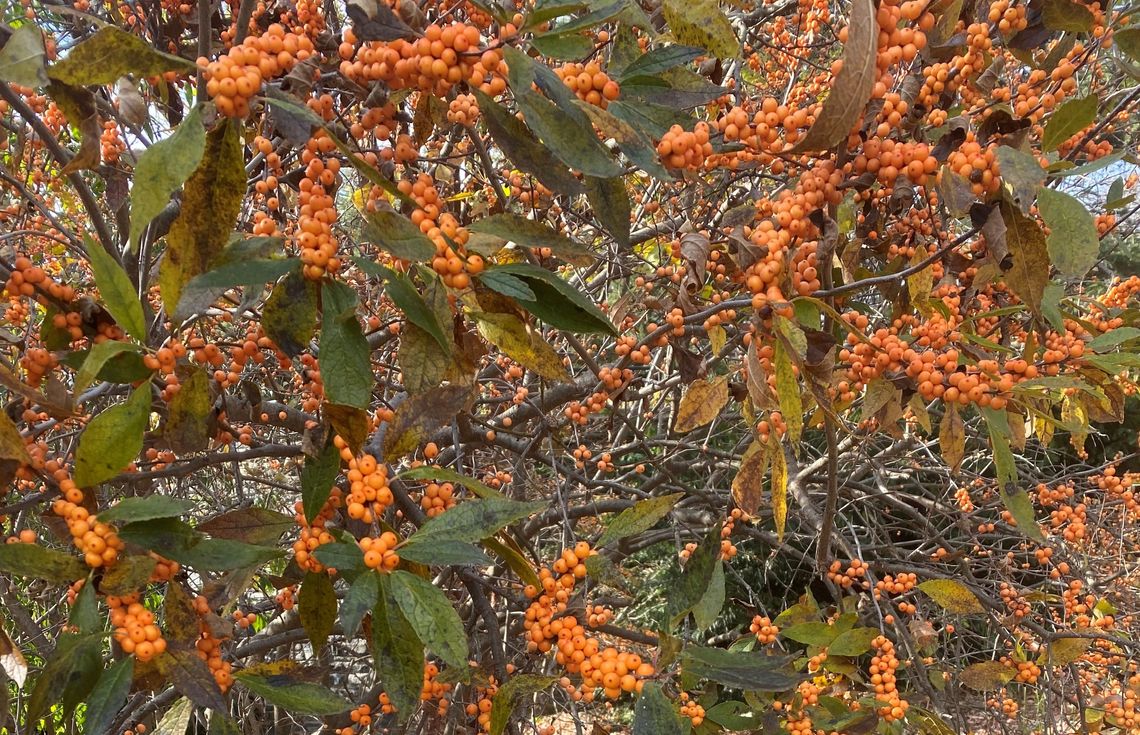
Deciduous winterberry hollies provide some of the most striking winter interest of all holly plants. While many cultivars have cycled in and out of popularity, ‘Winter Red’ and ‘Winter Gold’ remain standouts. ‘Southern Gentleman’ is a dependable male pollinator for both. 

‘Winter Red’ matures at ten feet tall and six to eight feet wide. Fruits begin turning red in late summer and, once leaves drop, branches are heavily laden with bright red berries that often persist from mid-September through mid-March—unless a flock of robins or catbirds stops by. 

‘Winter Gold’ offers fruits that are more salmon-orange than truly gold, but still stunning. Other excellent red selections include ‘Maryland Beauty’ and ‘Red Sprite’. Berry Poppins® is a smaller, three-to-four-foot selection, with Mr. Poppins® as its pollinator. For orange-red fruits consider Berry Heavy®, while Berry Heavy® Gold and ‘Golden Verboom’ offer soft yellow fruits. 

All winterberry hollies are superb for holiday cutting, wreaths, and winter décor. 

Designing With Hollies 

Hollies can serve many design functions in the garden. Upright and tree-form species such as the American holly, Ilex opaca and the Koehne holly, Ilex x koehneana can be used as screening plants. They can be left to grow naturally into their upright, pyramidal form, or with periodic pruning, they can take on a more formal appearance. 

In the winter garden, the many evergreen types provide an excellent backdrop for other winter-interest plants such as red-stemmed dogwoods, Cornus ‘Cardinal,’ or the brightly colored winter stems of willows like Salix alba ‘Chermesina’. 

Evergreen hollies can also be used architecturally in the garden. A beautiful American holly, Ilex opaca, or the English holly, Ilex aquifolium can be pruned into a formal pyramidal form that becomes a focal point. Pairs of hollies can frame a view or mark the corners of a formal bed. 

There are many diminutive types, such as selections of inkberry, Ilex glabra, that are excellent for the urban garden or a small courtyard. There are also many native hollies, including American holly, Ilex opaca; winterberry, Ilex verticillata; and inkberry, Ilex glabra, that provide important support for biodiversity in the garden. 

The Enduring Appeal of Hollies 

Hollies remain one of the most ubiquitous and reliable garden plants in the Mid-Atlantic. Whether grown as holly trees, medium-sized shrubs, or compact holly bushes, their diversity is remarkable. Most are evergreen, yet the deciduous winterberries may be the most ornamental shrubs for winter interest. 

While other garden plants rise and fall in popularity, hollies have stood the test of time. A wonderful place to see a vast array of hollies is at the Scott Arboretum and Gardens at Swarthmore College, home to a national holly collection. In my own garden in Swarthmore, PA, I grow Ilex glabra Gem Box® as a small evergreen shrub; two large Ilex × koehneana ‘Agena’ serve as evergreen sentinels; a few Ilex verticillata ‘Winter Red’ thrive in moist areas; and the PHS Gold Medal–winning American holly, Ilex opaca ‘Maryland Dwarf’, sits at the edge of the shade garden.