How to Create a Butterfly Garden
Creating a successful butterfly garden means providing everything butterflies need, including nectar for adults to host plants for caterpillars and sheltered places to rest.
1. Choose a Sunny Location
Butterflies are cold-blooded insects and depend on the sun to warm their bodies before they can fly. Choose a location that receives at least six hours of direct sunlight each day and is protected from strong winds. Open spaces where butterflies can easily land and move between flowers work best.
2. Plant Nectar Flowers Throughout the Seasons
Adult butterflies need a continuous supply of nectar from spring through fall. Planting flowers with staggered bloom times ensures there's always something in bloom.
Spring
Planning for pollinators in May is crucial following the winter season. Start spring with early nectar sources such as:
- Eastern redbud, Cercis canadensis
- Golden ragwort, Packera aurea
- Wild geranium, Geranium maculatum
Summer
Summer is when butterfly gardens are at their peak. Excellent nectar plants include:
- Milkweeds, Asclepias
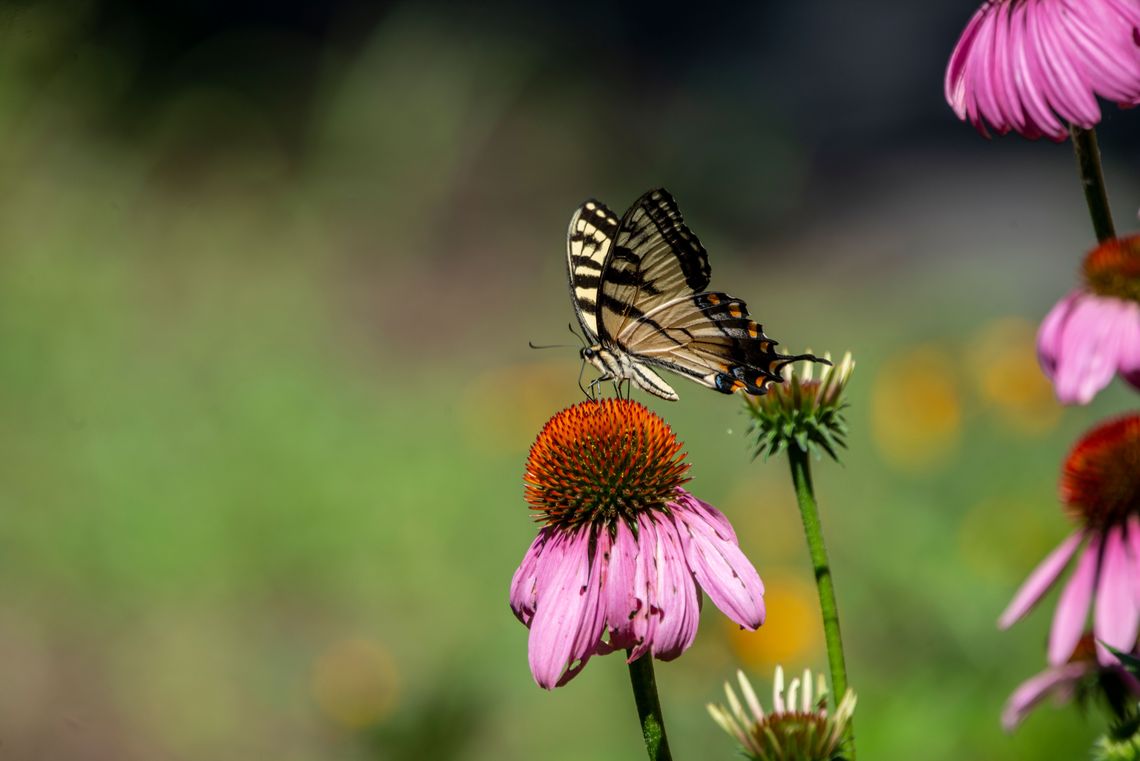
- Purple coneflower, Echinacea purpurea
- Pale purple coneflower, Echinacea pallida
- Joe-Pye weed, Eutrochium fistulosum
Fall
Late-season flowers provide critical food for migrating butterflies, including monarch butterflies.
Plant:
- Native asters, Symphyotrichum
- Goldenrods, Solidago
3. Add Host Plants for Caterpillars
One of the biggest differences between a flower garden and a butterfly garden is the inclusion of host plants.
While nectar plants feed adult butterflies, host plants provide places for butterflies to lay their eggs and food for developing caterpillars.
Milkweeds, Asclepias, are essential for monarch butterflies. Female monarch butterflies lay their eggs exclusively on milkweed, and the caterpillars feed on its leaves before forming their chrysalis.
Other host plants include:
- Native violets, Viola
- Spicebush, Lindera benzoin
Expect to see some leaves chewed...that's a sign your butterfly garden is working!
4. Provide Water, Shelter, and Resting Spaces
Butterflies need more than flowers to thrive. Include shallow water sources, such as a birdbath with stones or a puddling station where butterflies can safely drink. Flat rocks placed in sunny areas also provide warm resting spots.
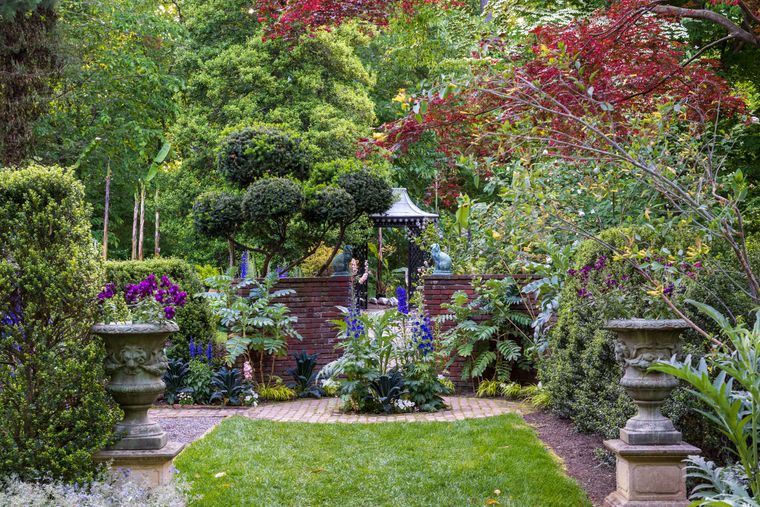
Surround your butterfly garden with shrubs or small trees to provide shelter from wind and predators. Leaving some natural leaf litter in the garden also creates habitat for overwintering insects and helps support a healthy ecosystem.
5. Skip the Pesticides
One of the most important steps in butterfly gardening is avoiding pesticides.
Insecticides don't distinguish between pests and beneficial insects. Products sprayed on ornamental plants, including roses, can kill butterfly eggs, caterpillars, and adult butterflies. Birds that feed on contaminated insects may also be affected.
Instead, practice integrated pest management and learn to tolerate a little leaf damage. Those chewed leaves often mean your garden is supporting the next generation of butterflies.
Best Native Plants for Butterfly Gardens
The milkweeds, Asclepias, are the quintessential host plants for monarch butterflies. The entire plant supports the monarch butterfly's life cycle. Eggs are laid on the leaves, where the larvae hatch and develop into caterpillars while feeding on the foliage. The caterpillars then form a chrysalis, and after 10–14 days, emerge as monarch butterflies that also feed on the nectar of milkweed flowers.
In the Mid-Atlantic or Zone 7, there are several common milkweed species that are excellent additions to a butterfly garden, including the common milkweed, Asclepias syriaca, with its big, bold leaves and light to dark pink flowers that bloom in June and July. For moist areas, the swamp milkweed, Asclepias incarnata, is an excellent choice, while the iconic butterfly milkweed, Asclepias tuberosa, produces vivid orange flowers from June through August.
Other Monarch Butterfly Nectar Food Sources
In addition to milkweeds, these native perennials provide valuable nectar for monarch butterflies:
- Joe-Pye weed, Eutrochium fistulosum
- Wild bergamot, Monarda fistulosa
- Black-eyed Susan, Rudbeckia hirta
- Dense blazing star, Liatris spicata
- Narrow-leaved mountain mint, Pycnanthemum tenuifolium
- New England aster, Symphyotrichum novae-angliae
- New York ironweed, Vernonia noveboracensis
- Wreath goldenrod, Solidago caesia
Excellent Shrubs for Monarch Butterflies
Native shrubs also provide nectar and shelter for monarch butterflies. Excellent choices include:
- Buttonbush, Cephalanthus occidentalis
- Eastern Baccharis, Baccharis halimifolia
- Wild plum, Prunus americana
- Pussy willow, Salix discolor
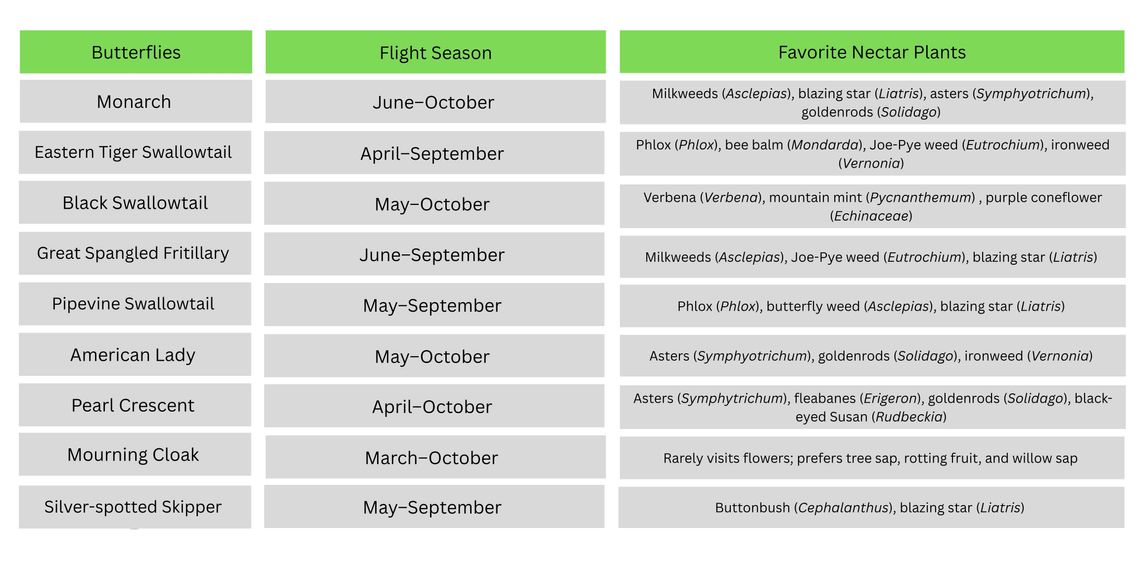
Below is a quick guide to help you choose nectar plants for specific varieties of butterflies.