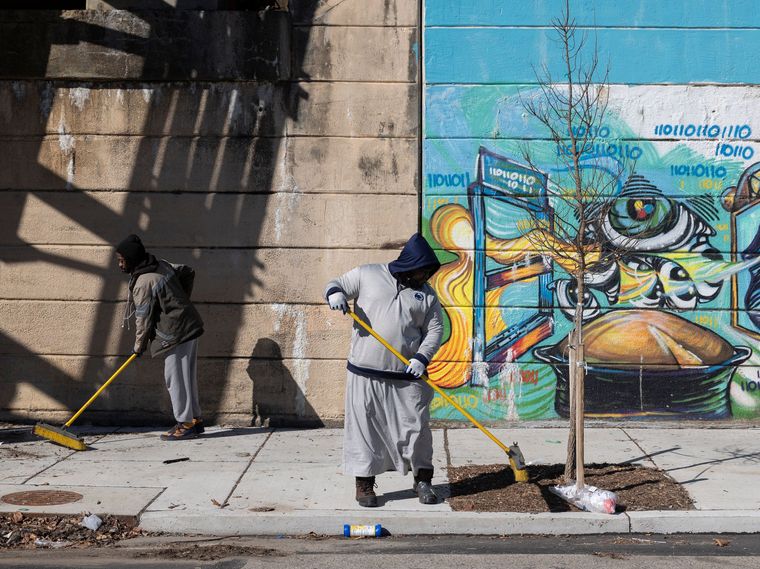
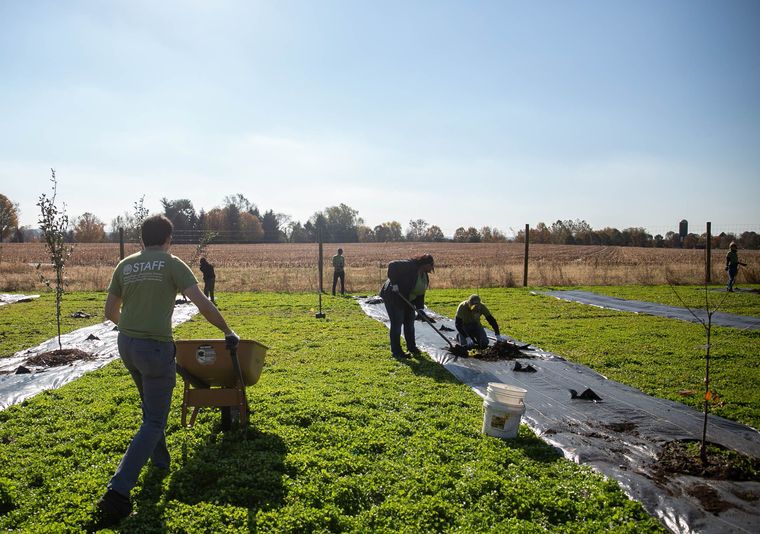
PHILADELPHIA — The Pew Charitable Trusts announced today that it awarded $1.15 million over four years to the Pennsylvania Horticultural Society (PHS) to support the second phase of its greening plan for Philadelphia’s Nicetown and Tioga neighborhoods, which is the first community-driven, neighborhood specific plan of its kind for the organization. The strategy is dedicated to creating more community spaces with grass, plants, trees, and flowers, as well as programs that bring residents together.
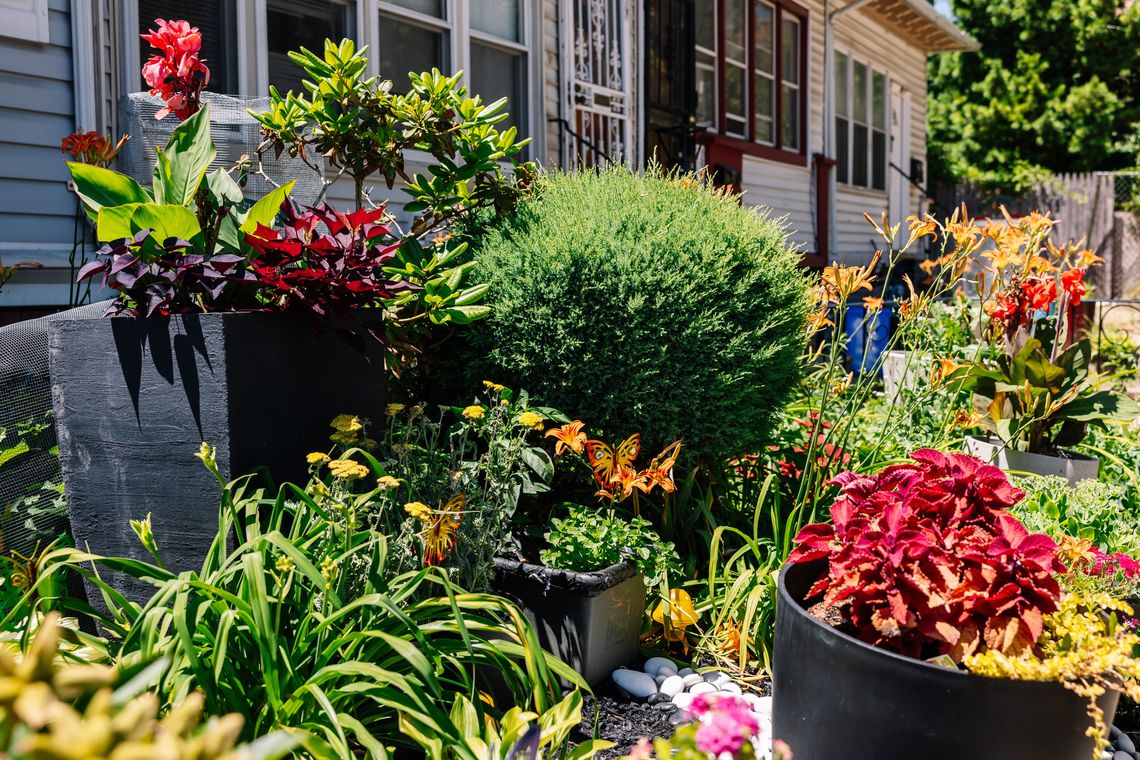
Pew’s funds will be used to continue community connectedness programs, including a front porch beautification challenge; support resident leaders in advancing community priorities; enhance already beautified lots with solar lighting, signage, low-maintenance plantings, and fence improvements; and clean and green new lots.
The grant will also help PHS to collect resident feedback, strengthening the evidence for the impact of greening on social connectedness and community safety. For example, in one study, residents living near greened lots reported significant reductions in feelings of depression, had measurable decreases in stress, and were more likely to use outdoor space to relax and socialize. Other research has shown that neighborhoods where residents are more connected to each other are more resilient in the face of challenges or crises, such as heat waves, natural disasters, and even the COVID-19 pandemic.
More than 400 residents engaged in the first phase of the planning process—led by PHS, Nicetown CDC, and Tioga United—which identified four priorities: reduce trash, increase access to healthy food, reduce crime, and increase job opportunities.
“The Pennsylvania Horticultural Society is incredibly grateful to The Pew Charitable Trusts for supporting the second phase of our community-driven greening plan for Nicetown and Tioga,” said Matt Rader, president of PHS. “Pew’s investment serves as a vote of confidence in our work and in neighborhoods, and we look forward to continuing to collaborate with residents and other partners to support social connection, achieve community priorities, and expand the model to other places.”
The grant spans two of three focus areas for Pew’s work in Philadelphia: community and cultural vitality and community safety. Along with a third focus on economic advancement, Pew is committed to helping Philadelphians and their communities thrive.
“Pew is pleased to support the Pennsylvania Horticultural Society’s dedication to enhancing community connectedness while expanding the evidence base for greening as an intervention to reduce community violence,” said Donna Frisby-Greenwood, Pew’s senior vice president for Philadelphia and scientific advancement. “At Pew, we believe that Philadelphians need to be able to meet their basic needs, feel safe in their neighborhoods, and have access to public and community spaces and cultural enrichment. Only when these needs are met can people begin to think about gaining skills and finding quality jobs that lead to economic advancement.”
A 2018 University of Pennsylvania study found that neighborhoods below the poverty line where vacant land has been restored or greened experienced a 29% reduction in gun violence. While homicides in Philadelphia are at the lowest level in 60 years, Nicetown and Tioga are among the 10% of the city’s neighborhoods where 40% of shootings take place. This data, combined with the community’s priority of reducing crime, made it important for Pew to also invest in and evaluate greening’s effects on violence. Pew has therefore partnered with the University of Pennsylvania’s Crime and Justice Policy Lab to analyze data that will be collected during the grant period.
Estelle Vaughn, a resident and member of the Nicetown and Tioga “Green Team,” which is the community-led steering committee for the plan, summed up the importance of these efforts.
“We’re grateful to everyone who has supported our community in achieving its goals,” Vaughn said. “We’re looking forward to continuing to partner with PHS and fellow residents to create a cleaner, greener, safer, and more connected neighborhood where everyone can thrive.”
###
Founded in 1948, The Pew Charitable Trusts uses data to make a difference and address the challenges of a changing world. In our hometown of Philadelphia, Pew promotes pathways to economic advancement, community safety, and community and cultural vitality. Our work strengthens local government, nonprofits, and civic institutions through grantmaking, capacity building, research, policy analysis, and stakeholder convenings. Learn more about Pew’s work supporting communities in Philadelphia.