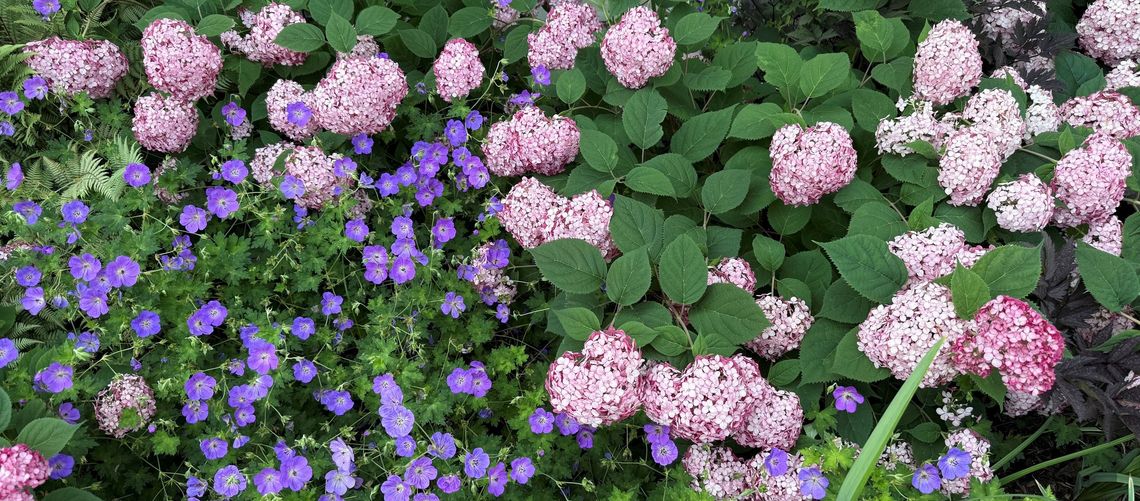
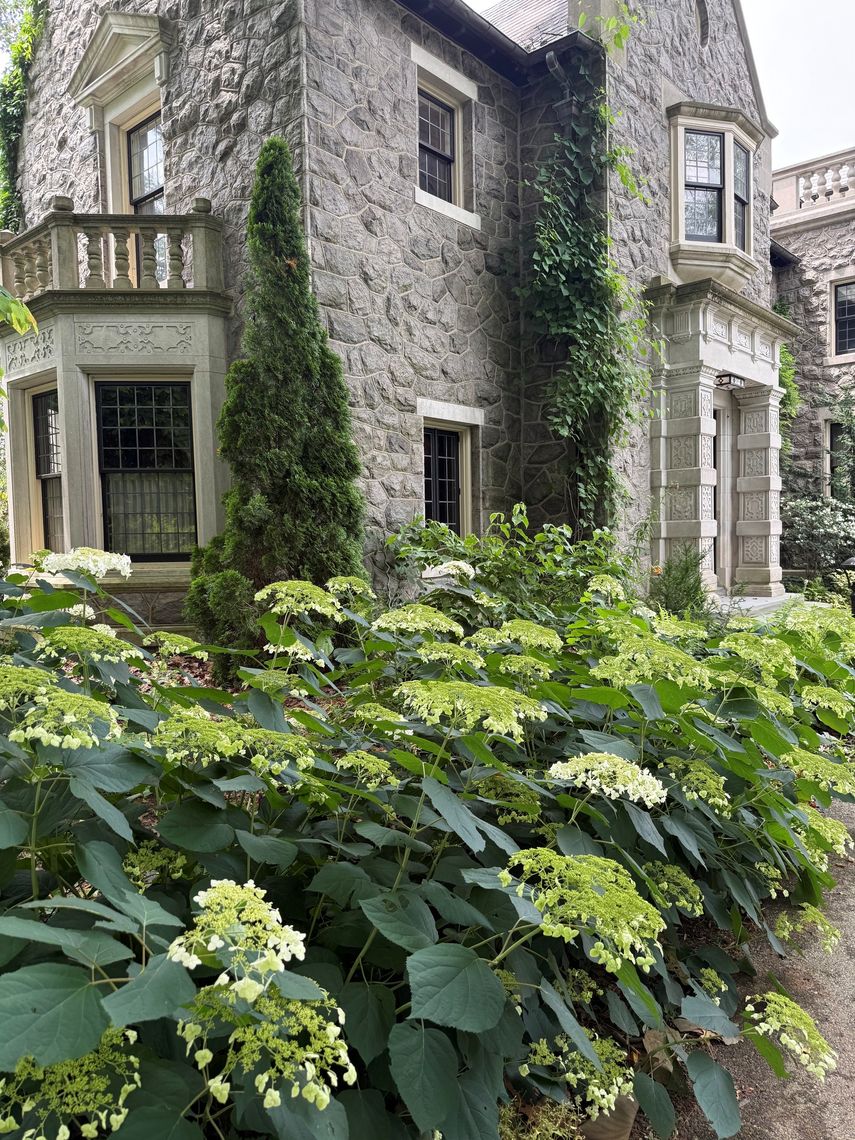
Hydrangea Arborescens Invincibelle® Ruby at Scott Arboretum
A few weeks ago, I attended Cultivate, a yearly international tradeshow held in Columbus, Ohio. At this show, breeding companies from across the globe bring new plants to market. Over 20 years ago, a bouquet of hydrangeas appeared on the cover of Martha Stewart Living. Overnight, this sparked a global renaissance for hydrangeas, and enthusiasm for this plant has not waned. Hydrangeas, in particular, are heavily promoted and showcased at Cultivate.
Picking the best-of-the-best hydrangeas for the home garden can be a daunting task. Today, there are literally hundreds of selections. Many of the new introductions are, in fact, superior selections, but some of the older cultivars have also stood the test of time.
Hydrangea arborescens 'Haas Halo' at Stoneleigh
The smooth hydrangea (Hydrangea arborescens), which is native to most of the eastern half of the United States, has gained considerable popularity in recent years. While the species will grow in shade, the best flowering occurs in part sun to full sun. ‘Annabelle’ is a historically popular cultivar with large, white, ball-shaped clusters of flowers in early summer. A “holy grail” of the hydrangea world for decades was to create a “Pink Annabelle,” which came to fruition due to the breeding work of Dr. Tom Ranney at North Carolina State University. Hydrangea arborescens Invincibelle® Spirit II has vivid, rich pink flowers, and Invincibelle® Ruby has deeper, garnet-colored flowers. Also growing in popularity are the large, flat-topped flowers of ‘Haas Halo’. This cultivar was selected by local plantsman Rick Ray. This plant is noted for its dinner-plate-like flowers, featuring an abundance of fertile flowers in the center surrounded by showy bracts. In recent years, the Mt. Cuba Center conducted a trial of Hydrangea arborescens and found that ‘Haas Halo’ is an amazing pollinator magnet. It is considered one of the very best pollinator-attracting shrubs.
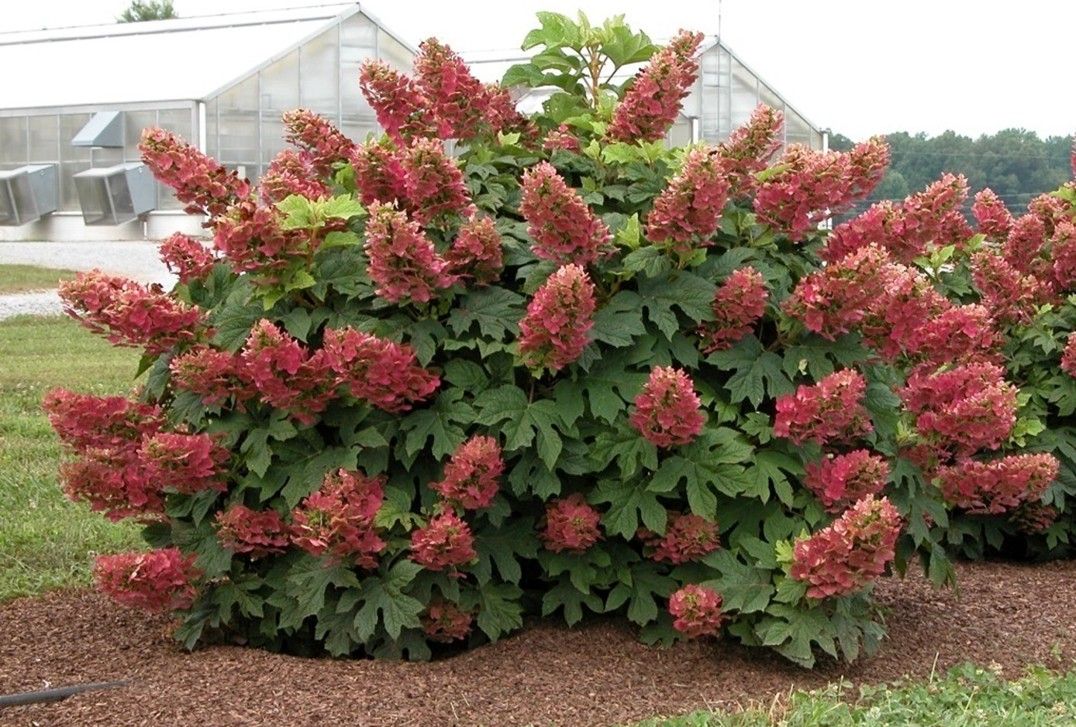
Hydrangea quercifolia 'Ruby Slippers"
The oakleaf hydrangea has also experienced a renaissance, with many new cultivars available to the home gardener. This is also a native hydrangea, hailing from southern states like Alabama. Despite its southern nativity, it is perfectly hardy in the Mid-Atlantic. In June, the PHS Gold Medal Committee convened to select six new plants for 2027. One plant that rose to the top was Hydrangea quercifolia ‘Ruby Slippers’. It was introduced in 2010 by the U.S. National Arboretum. While many oakleaf hydrangeas can reach over ten feet tall with an equal spread, ‘Ruby Slippers’ reaches about four feet tall with a spread of five feet, making it perfect for the smaller garden. It boasts an abundance of white, cone-like clusters of flowers in the summer that fade to pink, and its leaves turn wine-red in the fall.
Cultivars of these two native species of hydrangeas are great ornamental additions that can also support pollinators and boost the ecology of your garden.