leaf icon
leaf icon
leaf icon
calendar icon
Gardens To Visit
caret icon
Visit a PHS garden or landscape to help build stronger social connections with your community.
For Neighborhoods
caret icon
Explore programs that create healthy, livable environments and increase access to fresh food.
About Us
caret icon
Get to know our story, become a part of our staff, or see what is in the news with PHS.
The Flower Show

Hollies Reconsidered

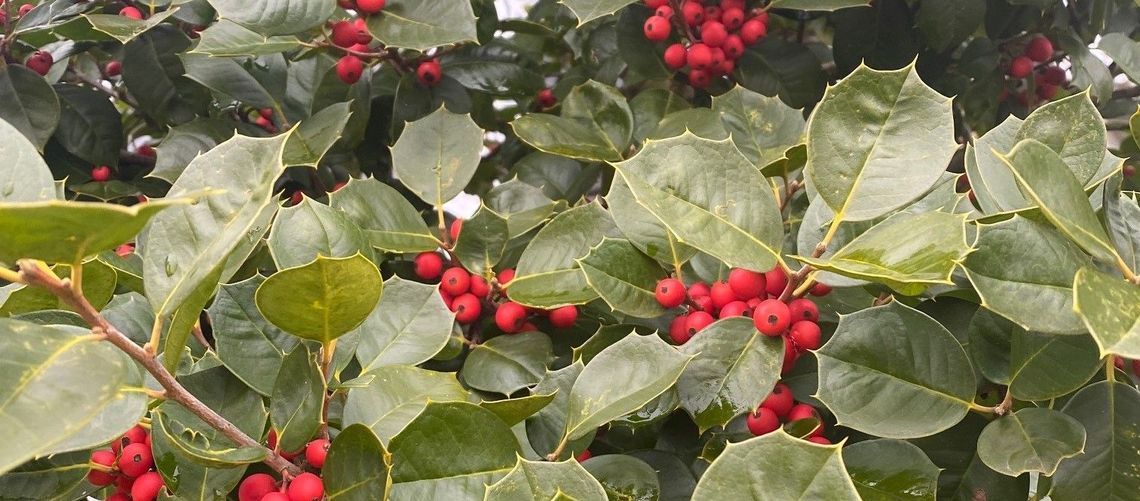
ilex opaca satyr hill

Ilex opaca 'Satyr Hill'

By Andrew Bunting, PHS Vice President of Horticulture

As the days get shorter and the nights get colder, many of our garden plants either deteriorate with each frost or start to slip into a period of dormancy in the garden. However, not all plants lose their seasonal interest. This is the time of the year when hollies really look their best. For many, a classic holly image is shiny, spiny evergreen leaves and red berries. While this is the typical form, there are also other types including more shrub-like hollies like the native inkberry holly, Ilex glabra, or the myriad of cultivars of the deciduous hollies, Ilex verticillata.

Just over the Delaware River in New Jersey, there are three native hollies that are found throughout the Pine Barrens. With the iconic holly “look” is the American holly, Ilex opaca (pictured above), which is characterized by evergreen leaves with distinctive spines and an abundance of red berries. There are dozens of cultivars. Some of the best include the PHS Gold Medal selection ‘Satyr Hill’ and ‘Jersey Princess’. It is worth noting that with all hollies, both male and female plants are needed for fruit production, so for these two cultivars plant a male ‘Jersey Knight’ nearby for pollination. The American holly forms an upright pyramidal tree that can be grown as a single specimen and is excellent for screening too.
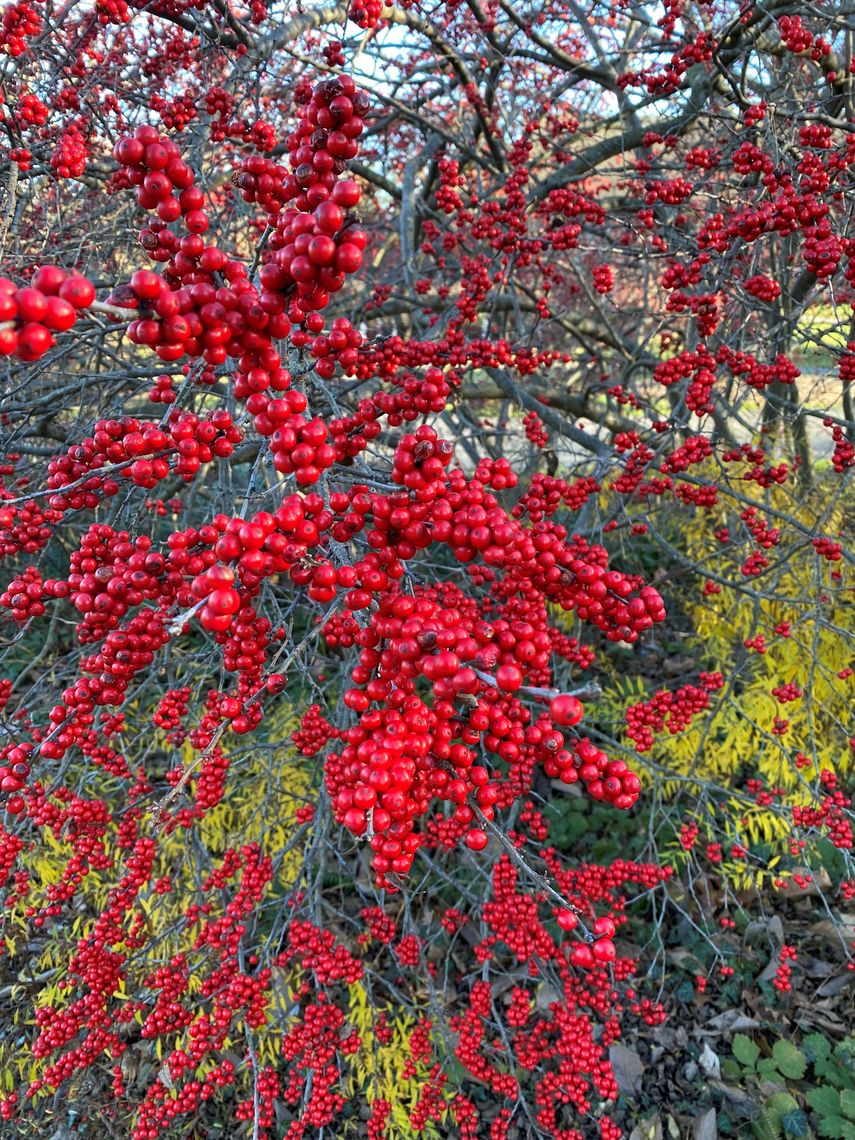
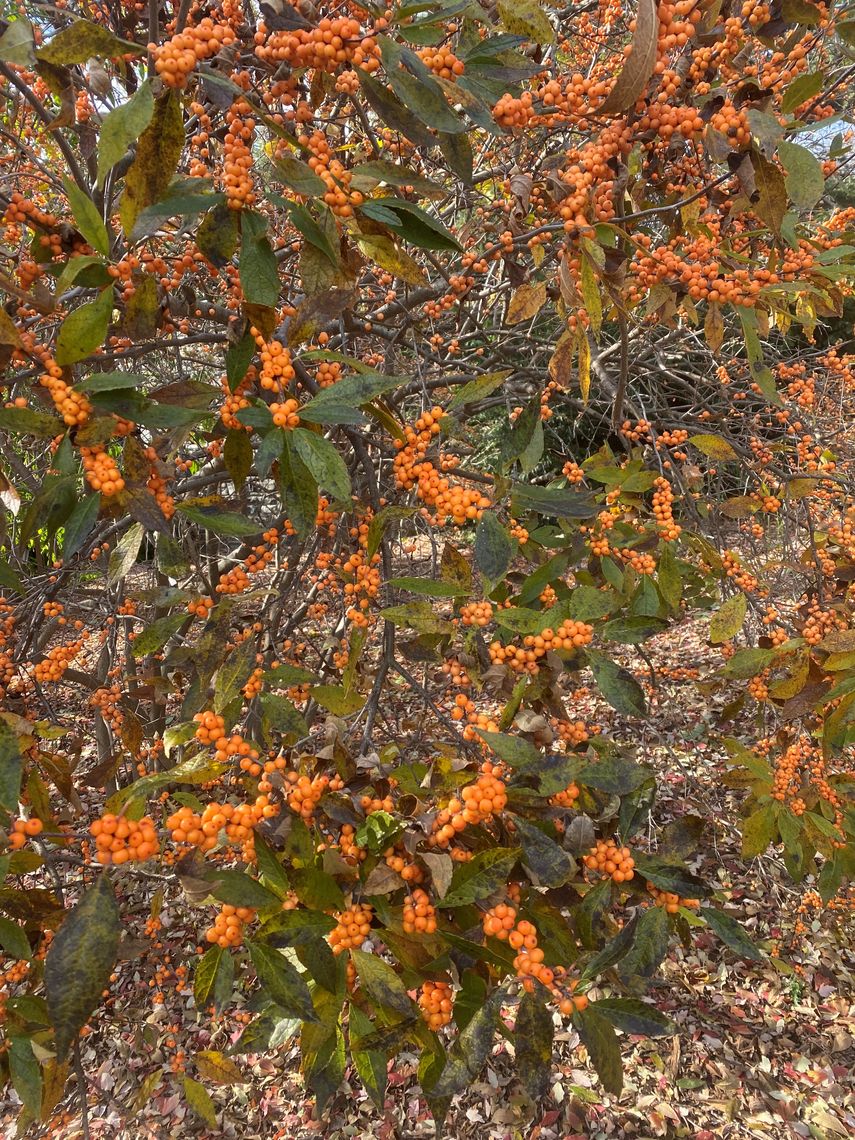
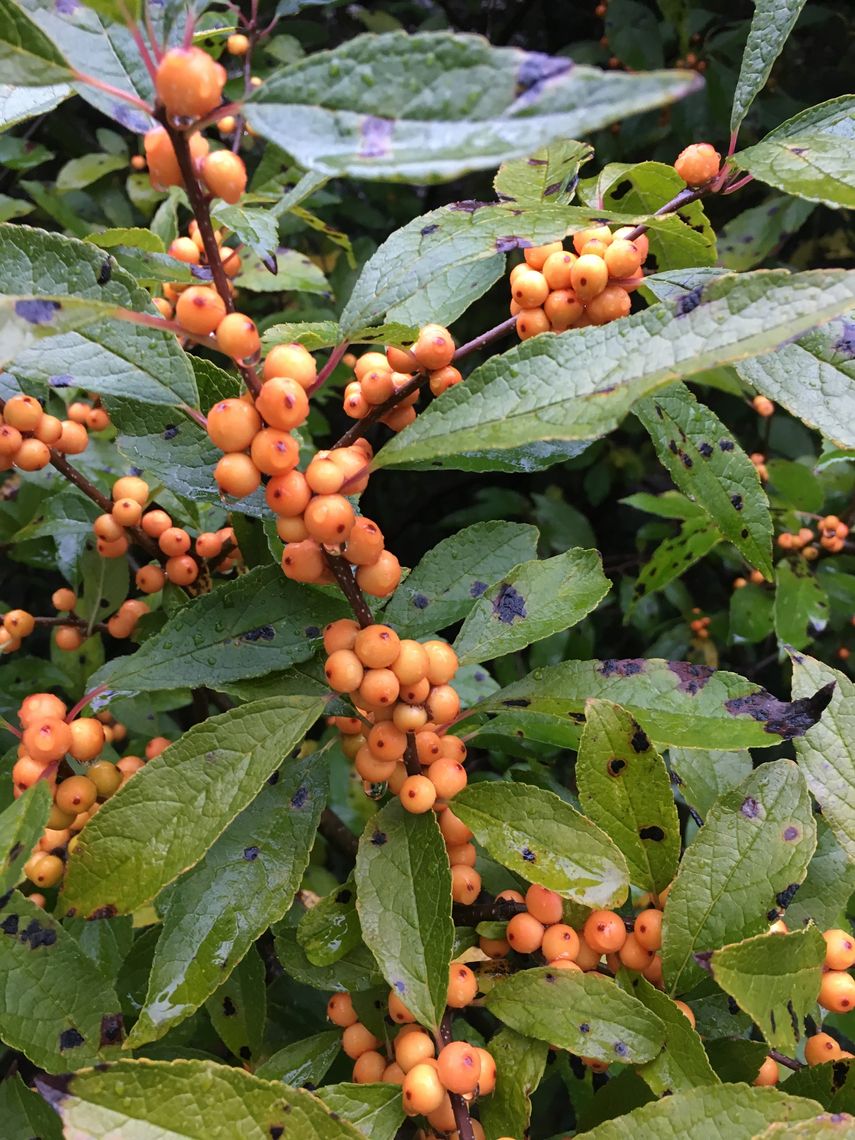
ilex verticillata winter red xx
'Winter Red' up close

The inkberry holly, Ilex glabra, in recent years has been touted as a potential replacement for the boxwood, which suffers from many issues including boxwood blight. The inkberry is a multiple-stemmed shrub reaching up to 10 feet tall with narrow, glossy, evergreen leaves. It is called the inkberry due to its small black fruits. ‘Shamrock’ is a medium-sized cultivar, and Strongbox™ is a new introduction with a boxwood-like, compact habit.

ilex verticillata winter gold scott arboretum
ilex verticillata Winter Gold at Scott Arboretum

The winterberries, Ilex verticillata, are unequaled in their display of winter fruits. This upright shrub grows by underground stems and can form small thickets over time. In the fall, the plump red berries mature, and just when they are starting to look their best, the deciduous leaves fall off revealing the abundance of fruits. While the catbirds, robins and mockingbirds will eat some fruits, most of the fruits are retained for most of the winter. It is also one of the few hollies that can tolerate wet conditions in the garden. For outstanding red fruits, ‘Winter Red’ is an excellent choice. ‘Winter Gold’ has salmon orange fruits, and ‘Southern Gentleman’ is a good male pollinator for both.

ilex verticillata winter gold closeup
ilex verticillata Winter Gold closeup