leaf icon
leaf icon
leaf icon
calendar icon
Gardens To Visit
caret icon
Visit a PHS garden or landscape to help build stronger social connections with your community.
For Neighborhoods
caret icon
Explore programs that create healthy, livable environments and increase access to fresh food.
For Gardeners
caret icon
Engage with PHS on gardening, whether you’re an expert or a beginner.
About Us
caret icon
Get to know our story, become a part of our staff, or see what is in the news with PHS.
The Flower Show

Deer Resistant Broadleaved Evergreen Shrubs

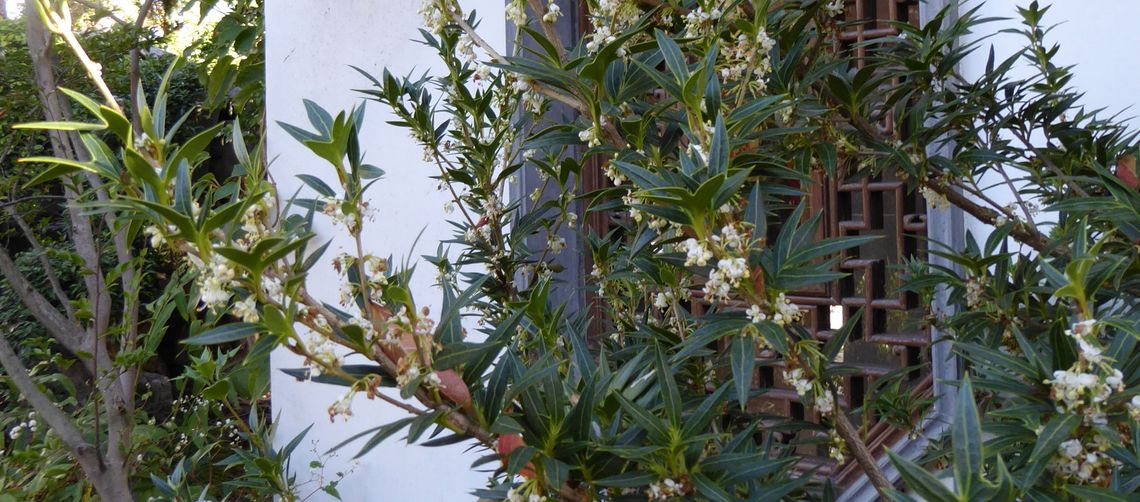
hero_osmanthus heterophyllus sasaba chinese garden portland 2017

By Andrew Bunting, PHS Vice President of Horticulture


In many gardens there is a constant battle with deer who can devastate many plants through browsing. There is a fairly short list of plants that are truly resistant to deer. In a recent conversation with Steve Mostardi and Mostardi Nursery in Newtown Square he outlined the broadleaved evergreen shrubs that have proven to be “deer proof." Perhaps the most popular broadleaved evergreen are the boxwoods, but many nurseries and garden owners alike are steering clear of boxwoods due to Boxwood Blight and an even newer pest which is lurking on the horizon, Boxwood Tree Moth. There are new boxwood types such as NewGen® boxwoods that have been bred and selected for their resistance to Boxwood Blight, but Boxwood Tree Moth is likely to be even more devastating.

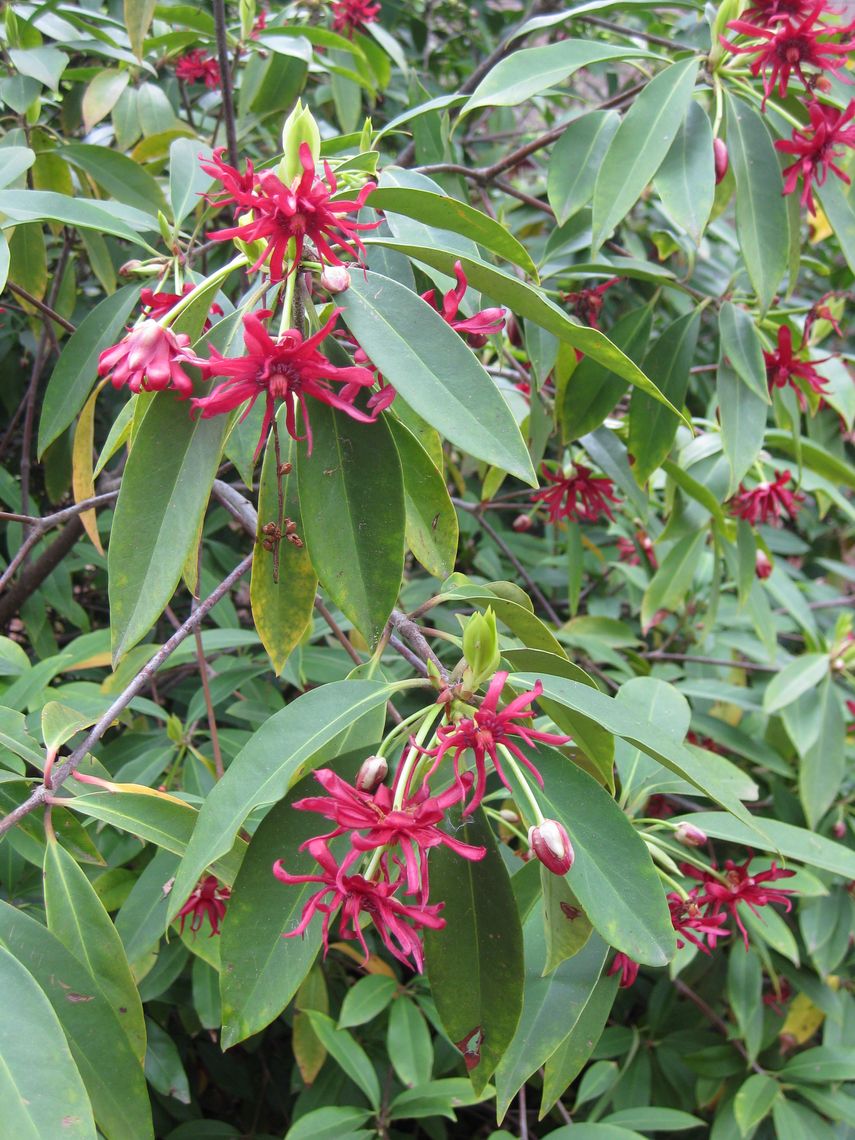
A great native evergreen is the Florida anise, Illicium floridanum. Even though it is native to northern Florida it has proven to be perfectly hardy in the Delaware Valley. The strap-like leaves have a pungent odor that dissuade deer from browsing. This upright shrub has red-maroon spider-like flowers.‘Halley’s Comet’ and ‘Aztec Fire’ are good red-flowered selectins.‘Alba’ is a white form. They are tolerant of considerable shade and will thrive in dry shade.  It is worth noting that not all illiciums are deer resistant. Other species like Illicium parviflorum, etc.  have not proven to be deer proof like the Florida anise.
illicium floridanum
Illicium floridanum

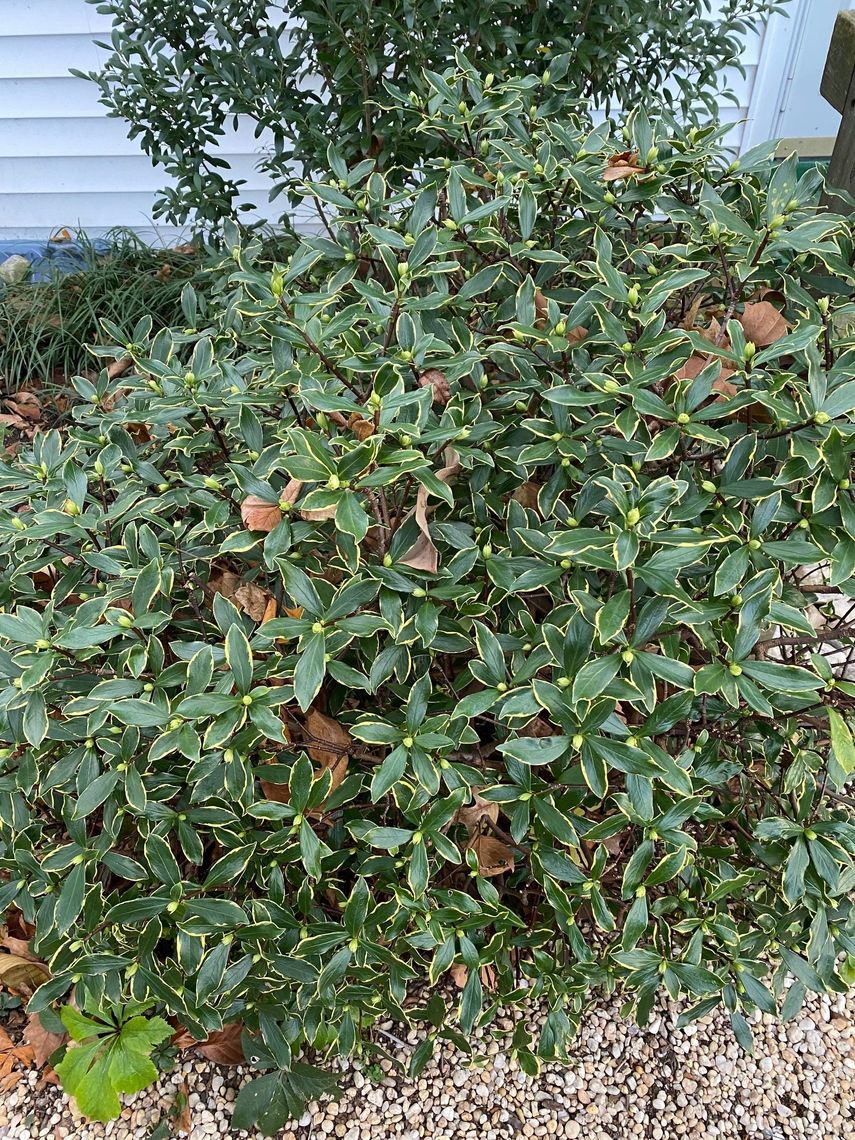
Steve has found that all daphnes are unaffected by deer browsing. The winter daphne, Daphne odora, was a considered marginal species in the garden 20 years ago. It could only be grown in a protected part of the garden like a courtyard. Today, it is a popular diminutive shrub. There are many interesting variegated selections, including Banana Split® which has green leaves with a creamy-yellow edge and ‘Aureomarginata’ with a think cream edge to the leaf.  In addition to the attractive foliage it blooms with an abundance of tubular pink or white flowers in late winter that are intensely fragrant.

daphne odora aureomarginata
Daphne odora 'Aureomarginata'

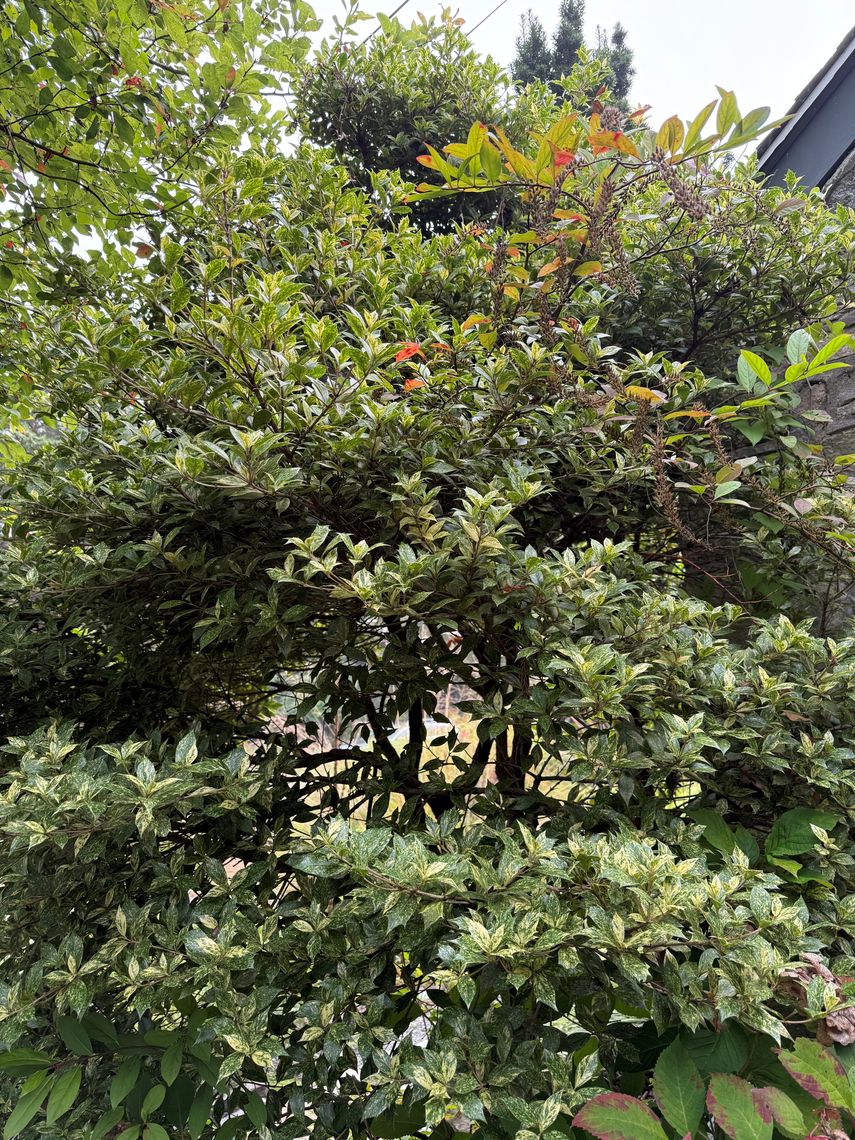
The tea hollies, Osmanthus heterophyllus has many uses in the garden. All of the cultivars have spiney, holly-like leaves. ‘Gulftide’ is an upright shrub that can reach twelve feet tall. It has dark green leaves. It can be used for screening or as a hedge. The tea hollies have tiny white flowers that cover this shrub in October. While the flowers are too small to be ornamental they are intensely fragrant. ‘Goshiki’ has very attractive green and yellow variegated leaves.  ‘Sasaba’ has very spiny leave (pictured in top image). Party Lights™ is a more compact form with striking pink, cream and yellow new foliage.

osmanthus herterophyllus goshiki
Osmanthus heterophyllus 'Goshiki’