Shade Garden Ideas: Best Plants and Design Tips for Shady Spaces
by Andrew Bunting
Most gardeners have parts of the garden where there is something creating shady conditions. These parts of the garden are sometimes overlooked because of the abundance of shade and the gardening challenges they present. But with the right shade garden ideas, these low-light zones can be transformed into beautiful, thriving spaces. Whether it’s the area beneath a mature tree or along the north side of your home, there are countless shade garden design approaches and plants that can bring color, texture, and structure to the darkest parts of your landscape.
Love growing your gardening knowledge? Sign up for a Know to Grow webinar—or join PHS and get in free!
Understanding Shade: Know Your Garden’s Light Conditions
Effective shade garden design starts with identifying the kind of shade you’re working with. Different trees and physical structures like overhangs and pergolas cast different intensities of shade, which impacts what you can grow:
Dry Shade is common under mature trees like white pines, Pinus strobus, or Norway spruces, Picea abies. These trees create dense shade and have thick roots that make soil moisture scarce.
Dappled Shade or Part Shade comes from high, filtered light through trees like honeylocust, Gleditsia triacanthos. This allows more flexibility when selecting plants.
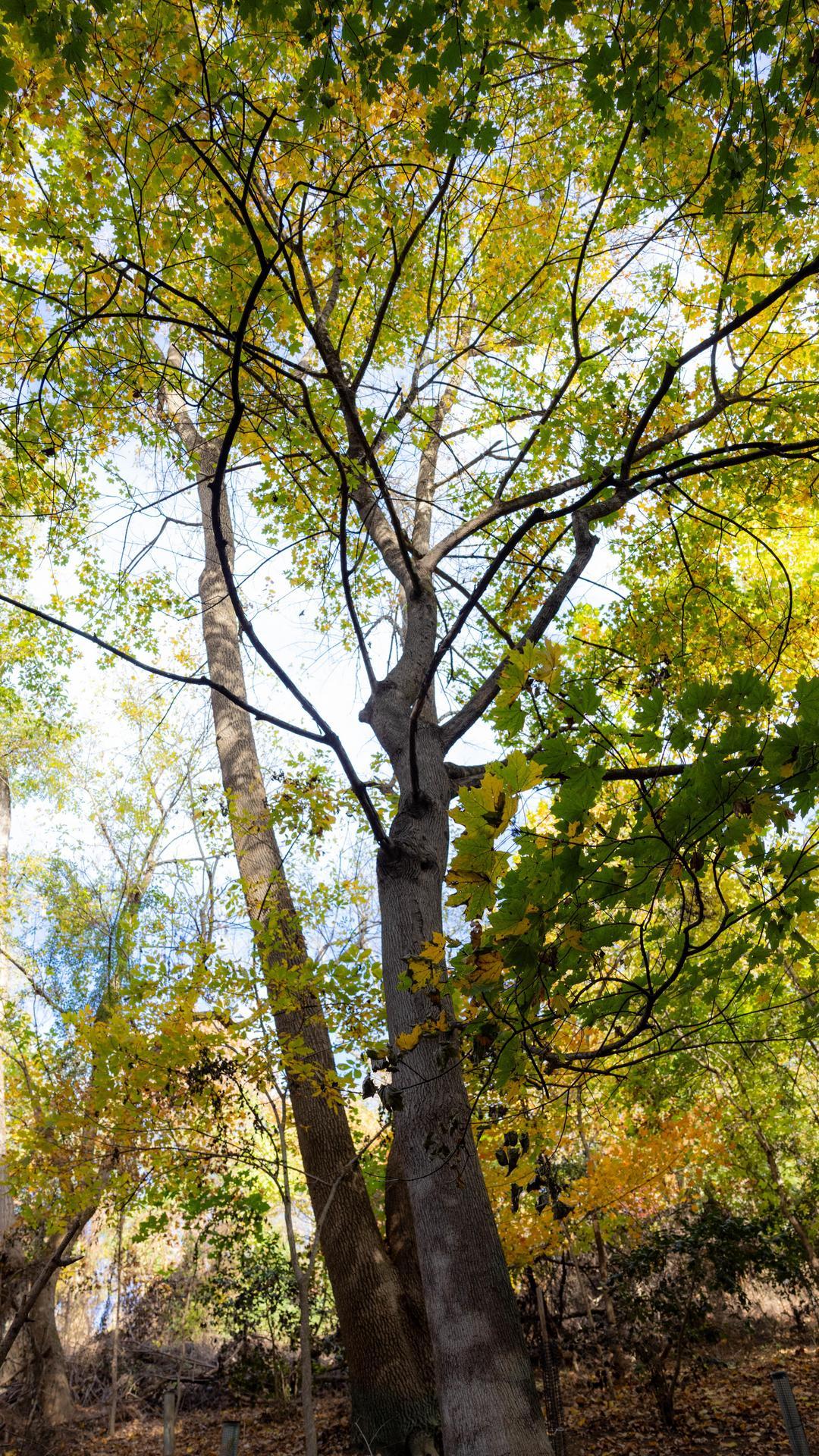
Deep Shade or Full Shade is created by dense canopies from trees like maples, catalpas, or sycamores. These areas receive minimal light and require carefully selected plants.
Shade Garden Design Considerations
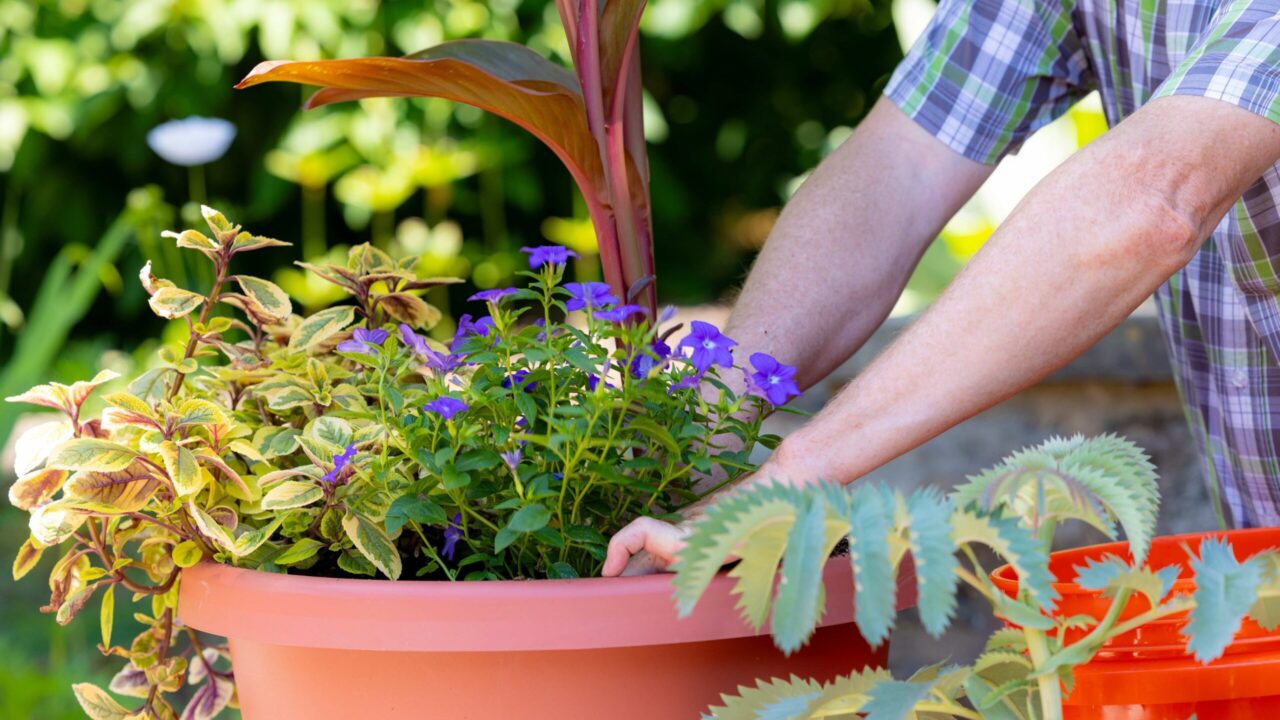
When planning your shade garden, think about both aesthetics and functionality. Start by choosing a location: under trees, along shady borders, or next to buildings with limited direct sunlight. These can become peaceful garden destinations by adding stepping stones, seating areas, or containers filled with shade-loving annuals.
Shade Garden Ideas for Brightening Dark Spaces
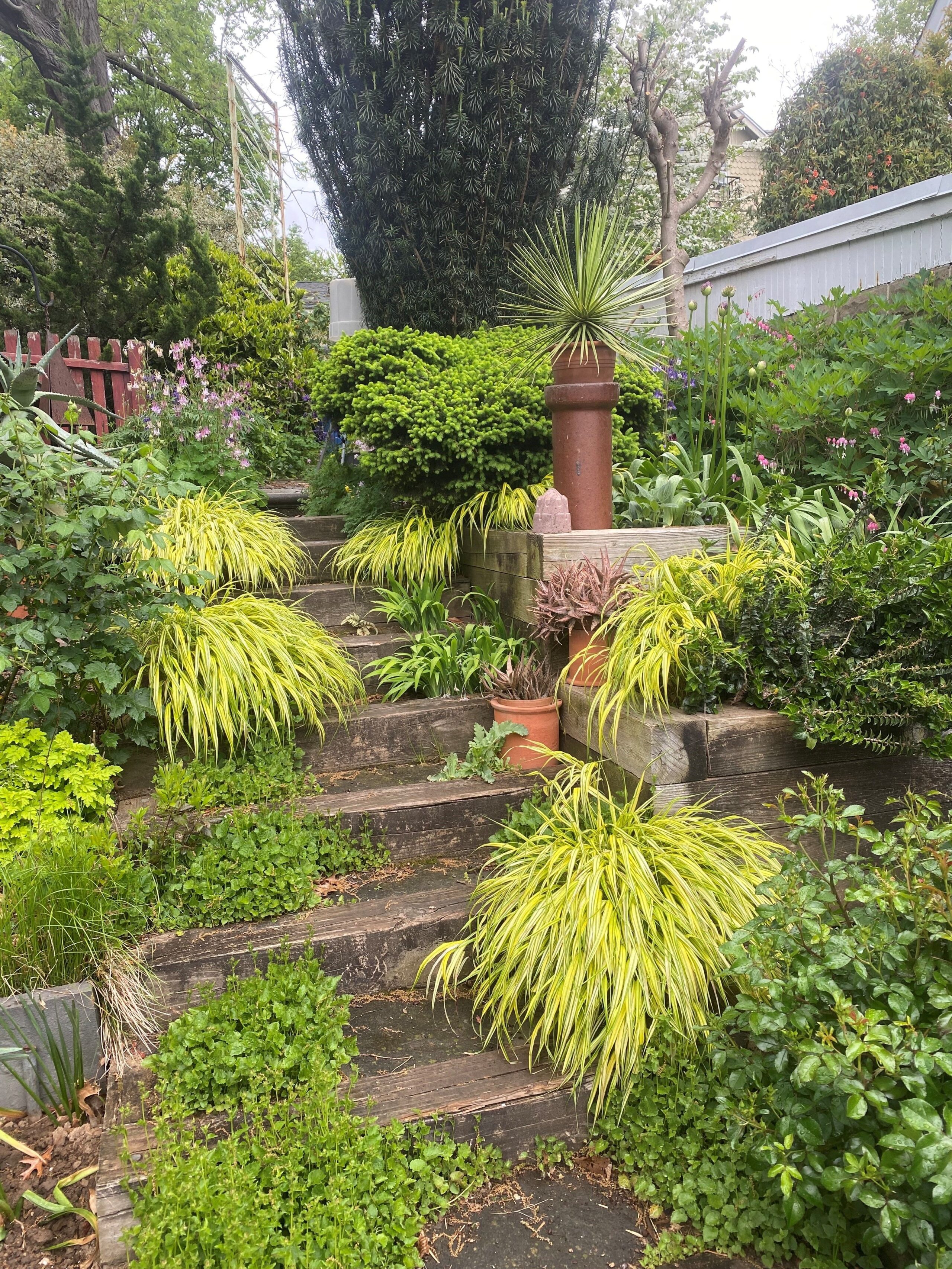
One of the best ways to make a shade garden feel vibrant is to use plants with lighter or variegated foliage. Silver, white, and chartreuse tones catch and reflect light, instantly lifting the feel of the space with their bright color and texture.
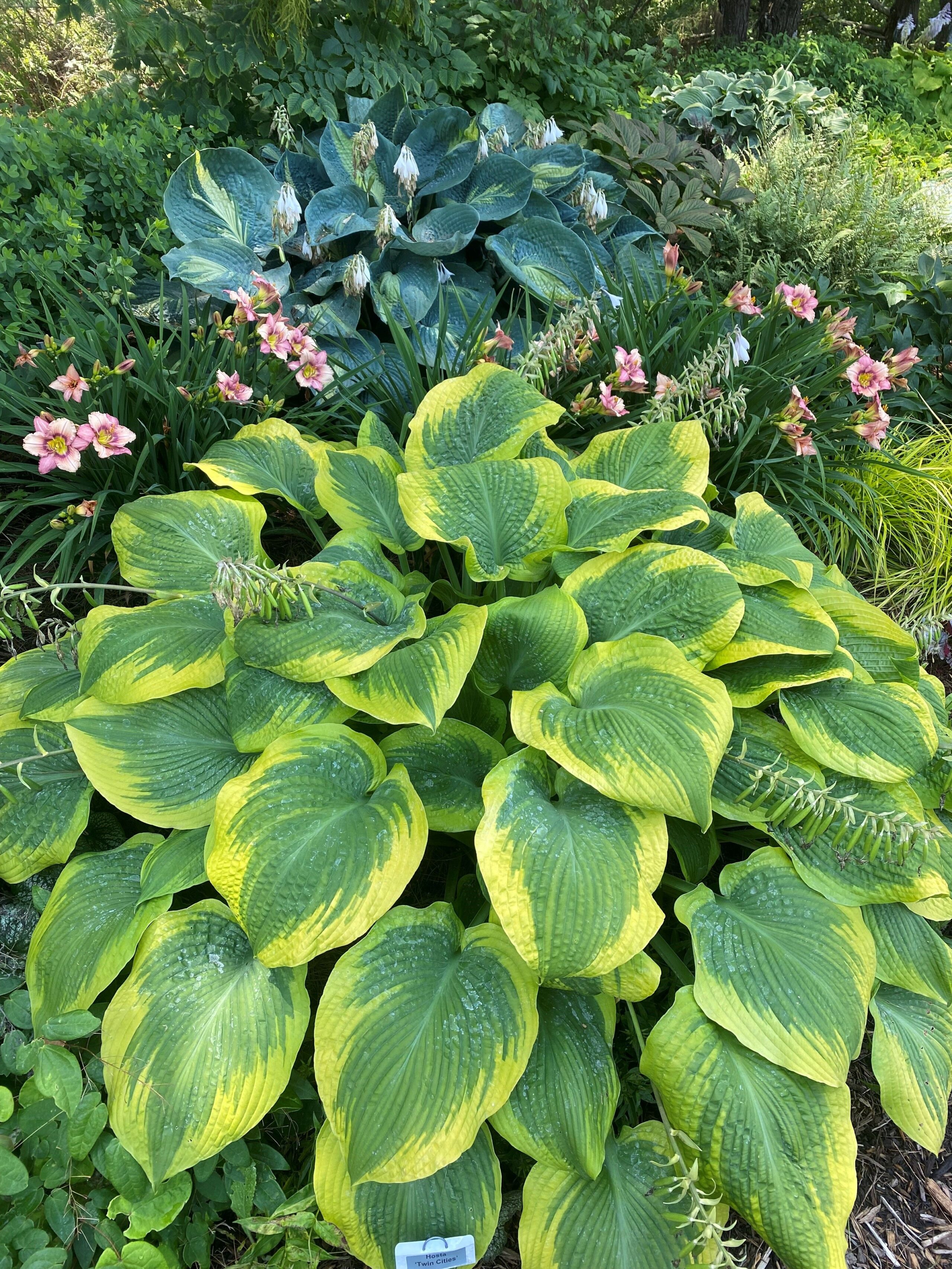
Hosta ‘Twin Cities’
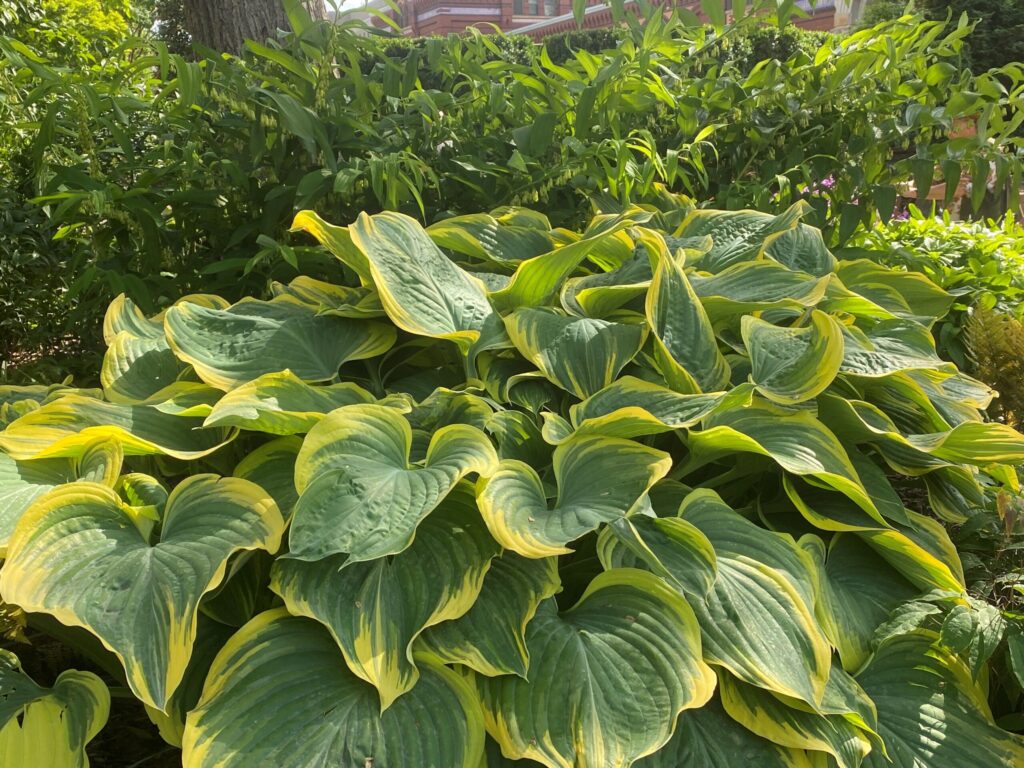
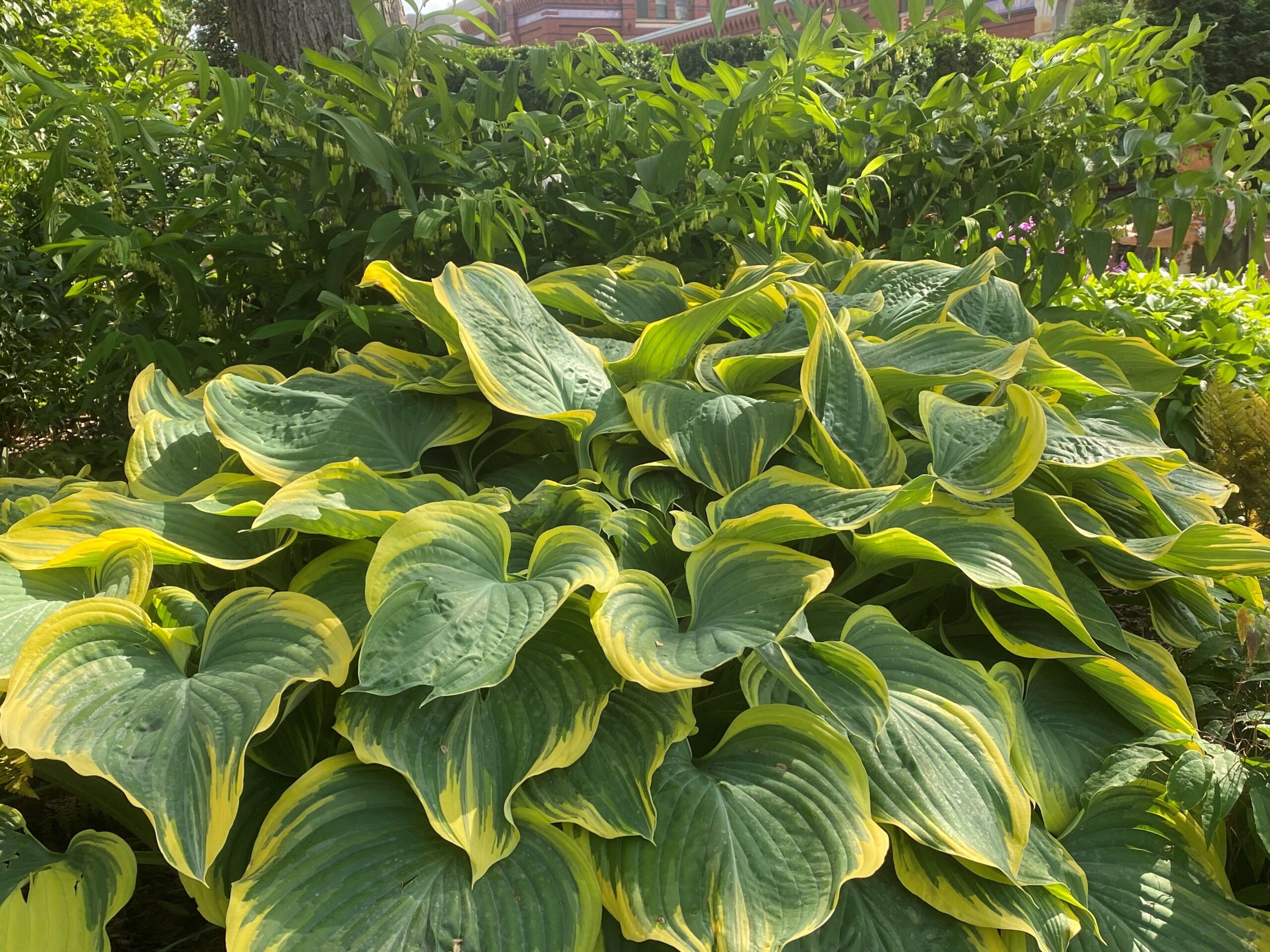
Hosta ‘Sagae’
Hakonechloa macra ‘Aureola’
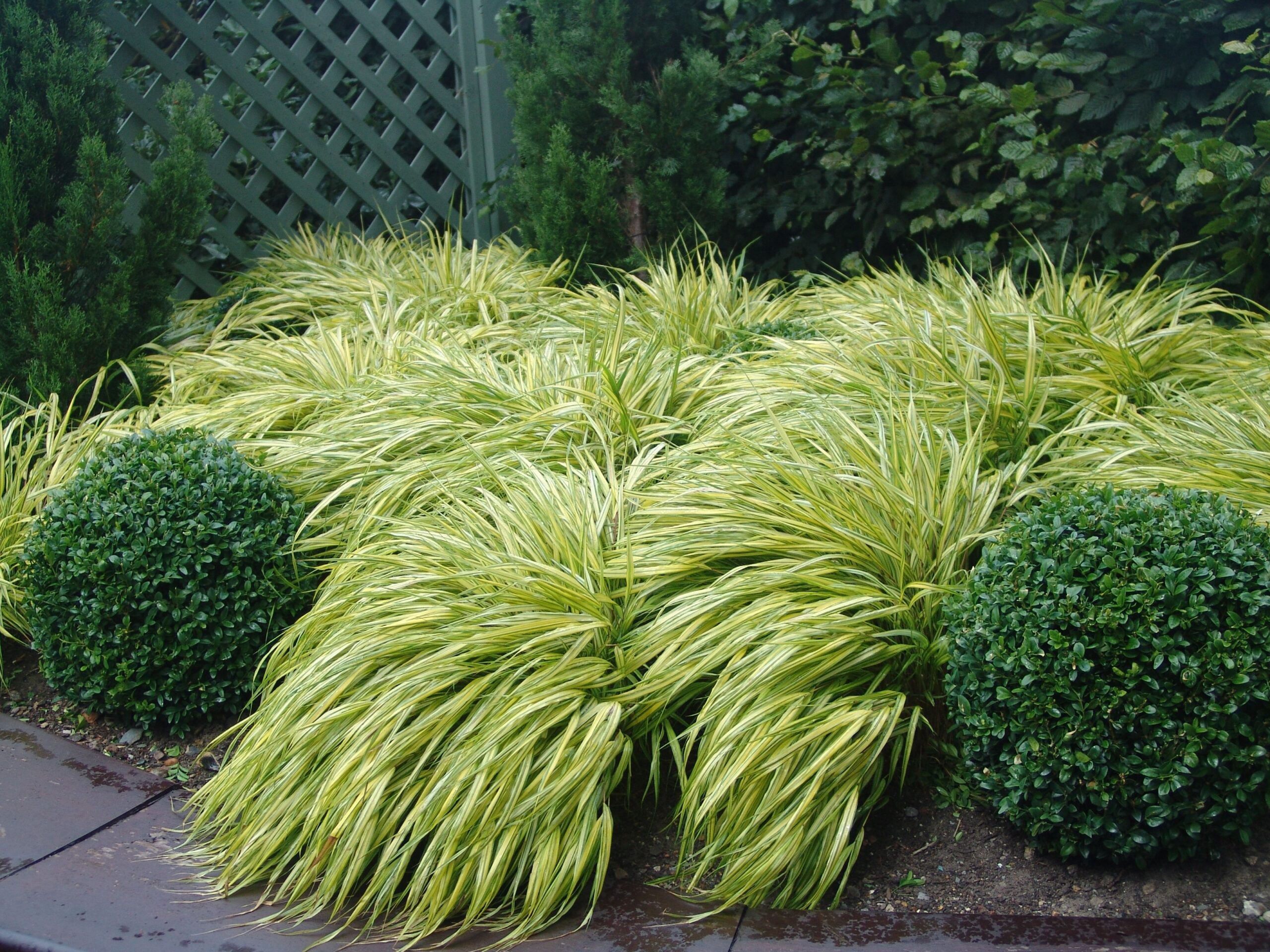
Hakonechloa macra 'Aureola'
Foliage Powerhouses for Shady Areas
There are many excellent shade plants that can create “pops” of color in the garden. Perhaps one of the best are hostas. They come in a wide range of sizes and colors:
Hosta ‘Sum and Substance’ – bold elephant ear-like leaves with a yellow sheen
‘Twin Cities’ – large leaves with a yellow edge and dark green in the center
‘Sagae’ – strikingly variegated and dramatic
‘Grand Tiara’ – smaller leaves that are yellow and green
‘Echo the Sun’ – bright golden leaves
Hakone Grass, Hakonechloa macra, adds graceful texture and movement:
‘All Gold’ – bright golden leaves for impact
‘Aureola’ – a blend of green and chartreuse
‘Albomarginata’ – cream and green variegation
The Chinese forget-me-not, Brunnera macrophylla, are a perfect shade garden addition for their abundance of powder blue flowers in April-May. There is also a great variegated selection called ‘Jack Frost’. The bold heart-shaped leaves have dark green veins, which highlight the striking pewter variegation.
Polygonatum odoratum ‘Variegatum’ is a selection of Solomon’s Seal with arching stems and beautiful white and green variegated leaves. This combines nicely with hostas and ferns.
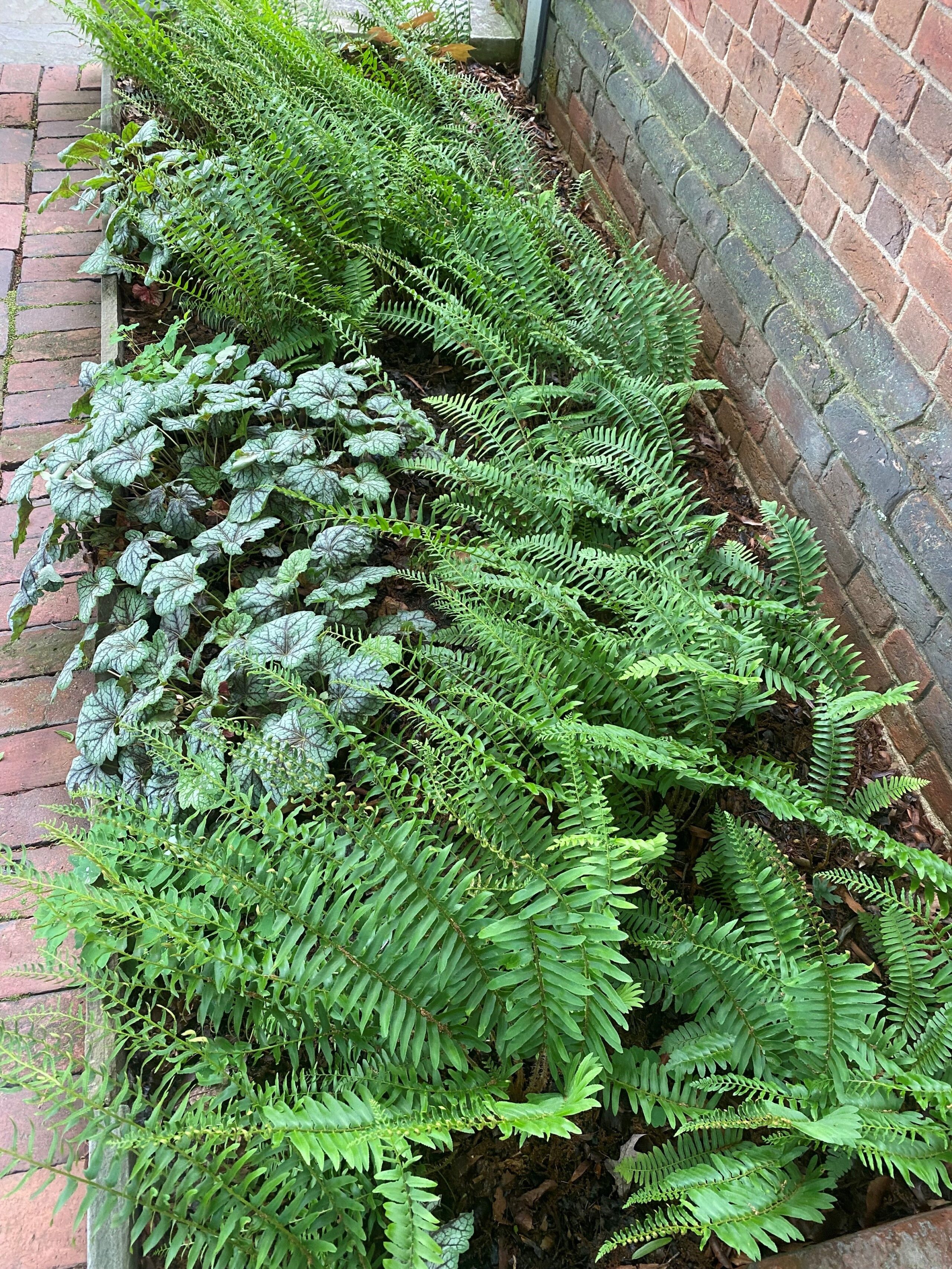
Native Christmas fern, Polystichum acrostichoides
Fern Favorites: Texture for Every Shade Garden
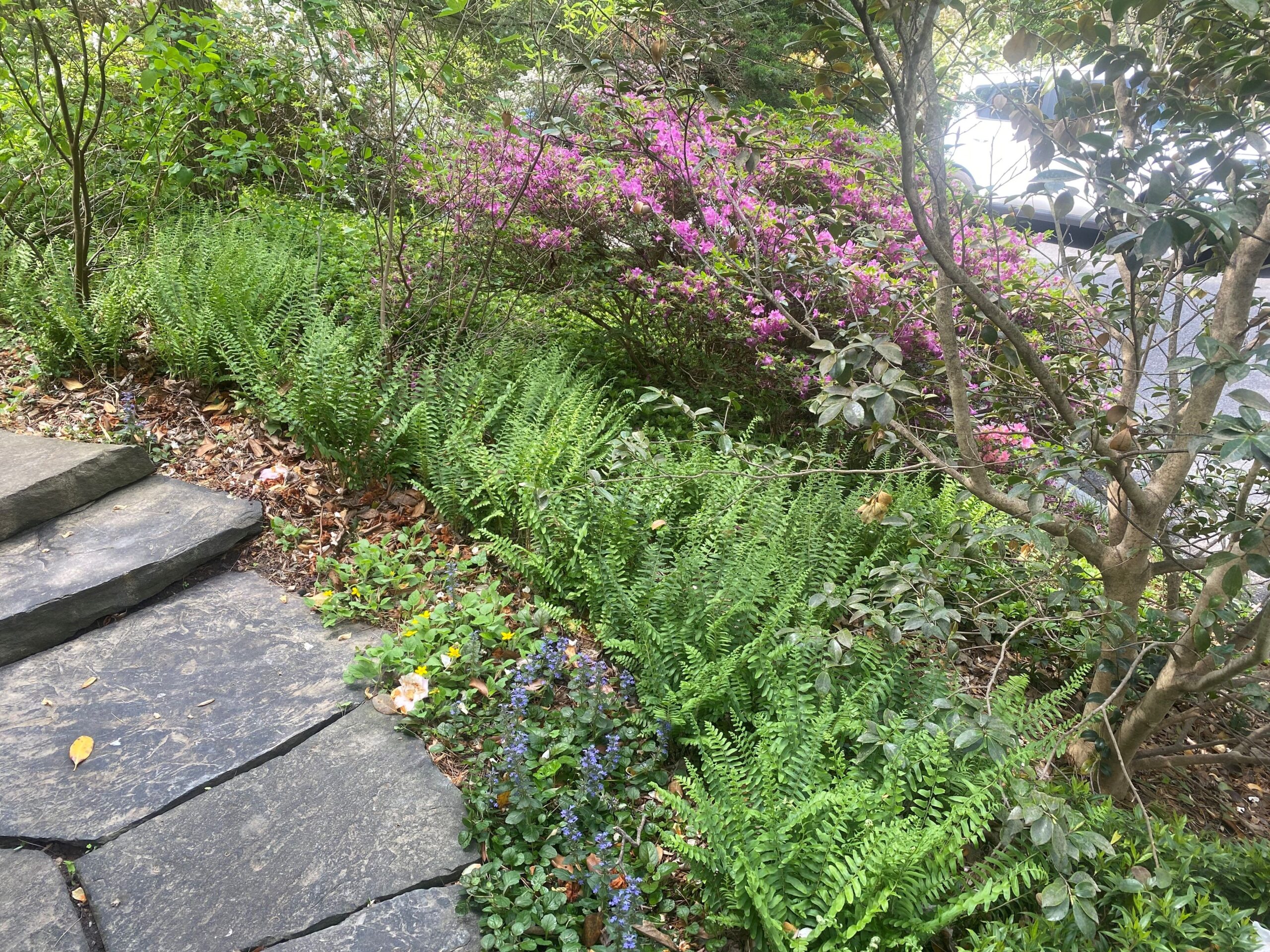
Ferns are foundational in shade gardens because of their graceful, fine texture. They’re also deer-resistant and pair well with bold foliage plants.
Native ferns that are great aesthetic additions to the shade garden, including the lady fern, Athyrium felix-femina; the maidenhair fern, Adiantum pedatum, and the hayscented fern, Dennstaedtia punctilobula
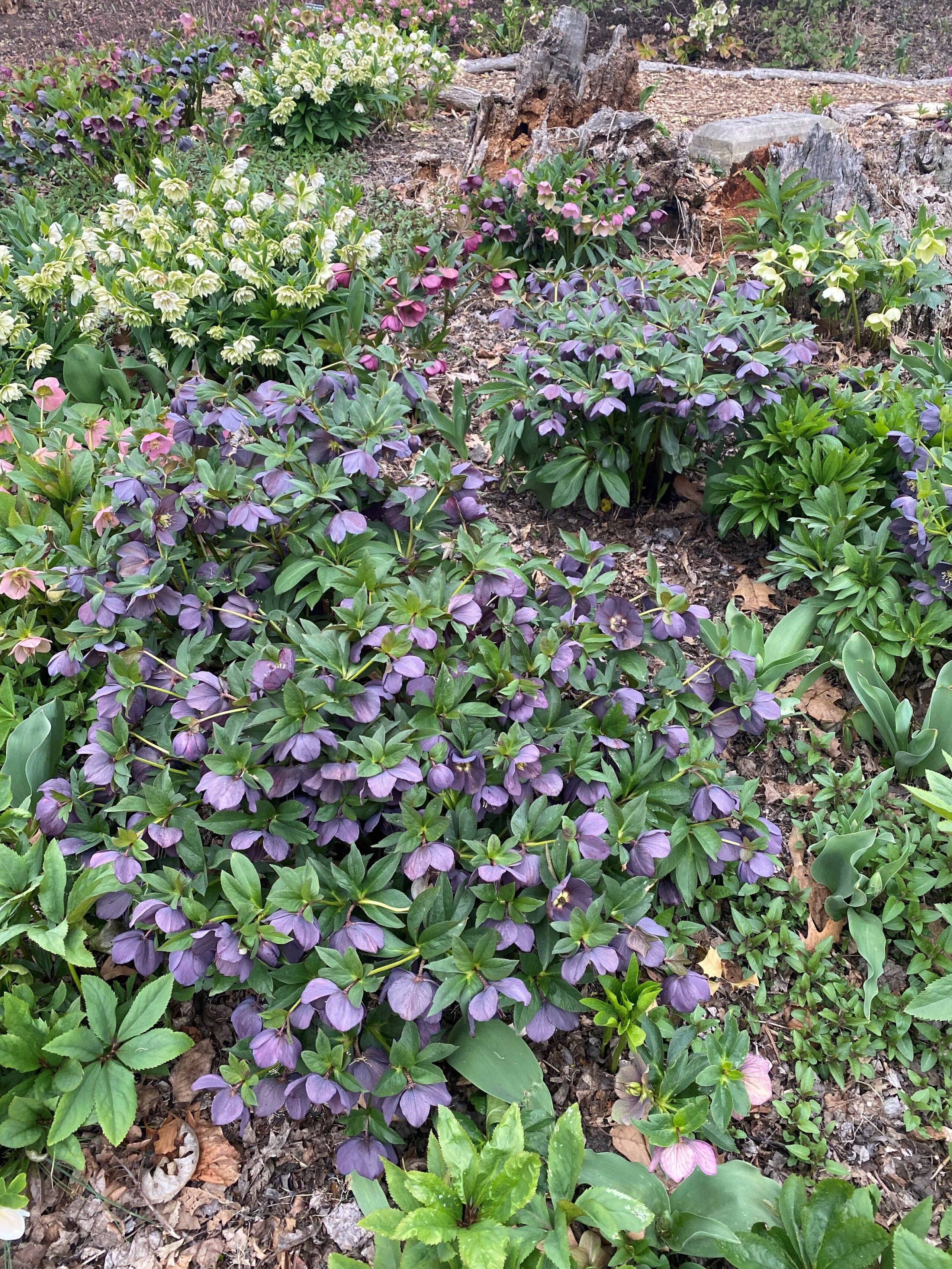
The Lenten rose, Helleborus x hybridus
Flower Power in the Shade
While perennials with leaf variegation can brighten a shade garden, there are many woodland plants that also bring an abundance of flowers to your shade garden:
Native foamflower,Tiarella cordifolia, is a ground-covering perennial with spikes of fragrant white flowers in May. ‘Brandywine’ is a selection with a burgundy blotch on the leaf.
Hellebores are a favorite for their winter flowers. The Christmas rose, Helleborus niger, emerges with pure white flowers in December-January. The Lenten rose,Helleborus x hybridus, has cup-shaped flowers in white, yellow, pink, and maroon in March. All the hellebores are evergreen, so they also bring considerable winter interest to the garden before they flower.
For late season interest, the hardy begonia, Begonia grandis, comes into flower in late summer to early fall. The bold foliage is carmine on the undersides, and then spikes with tear-drop-like pink flowers are borne in abundance. Over time, the hardy begonia will seed around the garden serendipitously coming up in “just the right spot”.
Start with trees and shrubs, add mid-sized perennials, and finish with groundcovers to create a lush, layered garden look.
Shade Garden Design Tips
To successfully design a shade garden, here are some basic design considerations:
Combine bold and fine textures: try a hosta next to Hakone grass or a fern for contrast.
Mix variegated foliage with solid green to keep the composition visually balanced.
Add layers by starting with trees and shrubs, then mid-sized perennials, and finally groundcovers to complete the composition.
Don’t forget to add structure with shade-loving shrubs such as hydrangeas or rhododendrons and trees like the redbud, Cercis canadensis.
Consider the type of shade: If there is dry shade, consider plants like Christmas fern, Epimedium, and European ginger, Asarum europaeum, which will thrive in those conditions.
Shade Garden Maintenance Tips
Once your shade garden is planted, maintenance is fairly straightforward:
Soil prep: Before planting a shade garden, it will be important to prepare the soil for planting. Adding compost or other organic matter like leaf compost.
Mulch: In the spring, mulching the shrubs and perennials with leaf compost is a nice aesthetic touch, but also helps with weed suppression.
Watering: Shade gardens generally need less water than other gardens, but should be checked especially during times of drought.
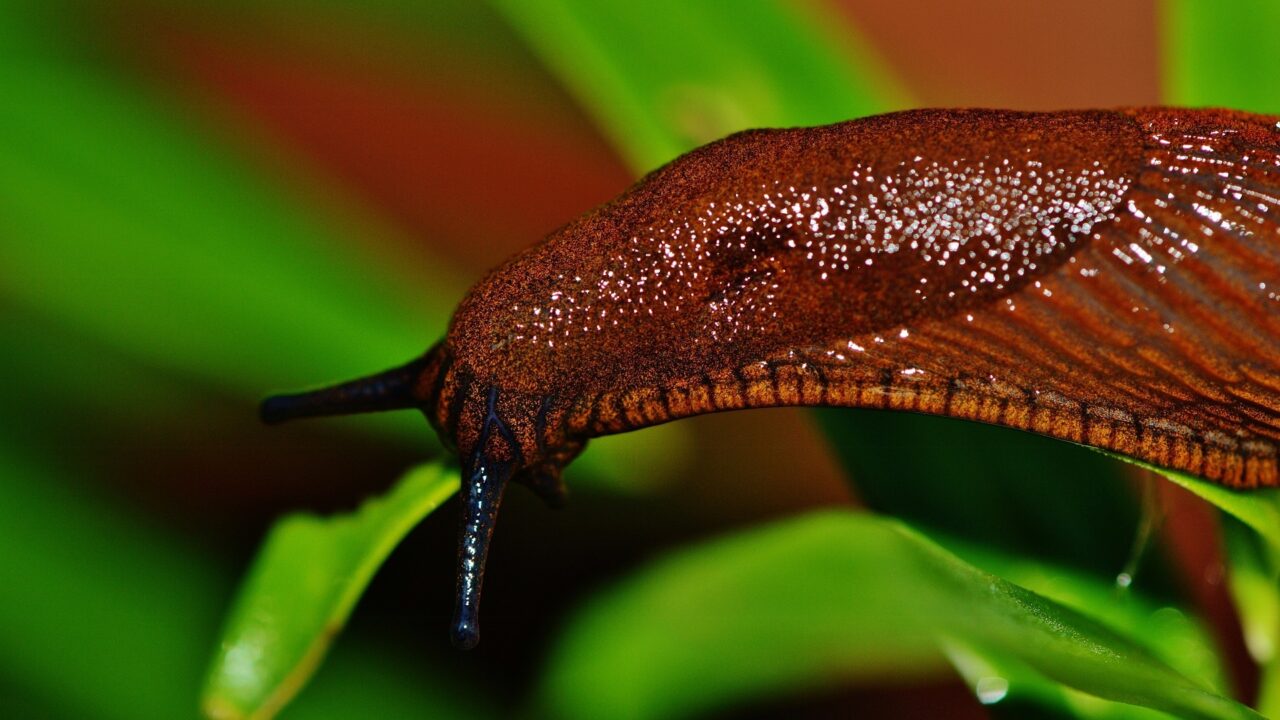
Pest control: Some plants, especially hostas, are prone to damage by slugs. There are various organic approaches to combating slugs in the garden.
Gardening in the shade isn’t a limitation; it’s an invitation to work with beautiful native woodland plants and combine them with favorites like hostas and hellebores. With a little planning, you can turn shady corners into lush, layered spaces filled with texture, color, and seasonal interest. From small ferns to striking flowering shrubs, shade gardens offer a whole world of possibilities waiting to be explored.
Integrated Pest Management (IPM) is not a single method for controlling pests, but rather a decision-making process to incorporate into your gardening.