Low Maintenance
Trees
Trees & Landscape Care
Urban Greening
3 Types of Tough Urban Trees
Learn about three different types of tough urban trees from PHS VP of Horticulture Andrew Bunting.
Discover a variety of native trees for your garden, from smaller-space options to larger trees with beautiful seasonal blooms.
There are many native trees to the Mid-Atlantic that offer a variety of ornamental qualities for the home garden. Beyond their beauty, native trees provide important food and nectar sources for native birds, mammals, and insects. With so many species to choose from, there is a native tree for nearly every garden, whether you have a large property or a small city garden.
Different native trees are adapted to different soil conditions and light requirements, making it possible to find a tree that will thrive in your particular planting site. From small ornamental trees to large shade trees, here are some excellent native trees to consider for your garden.
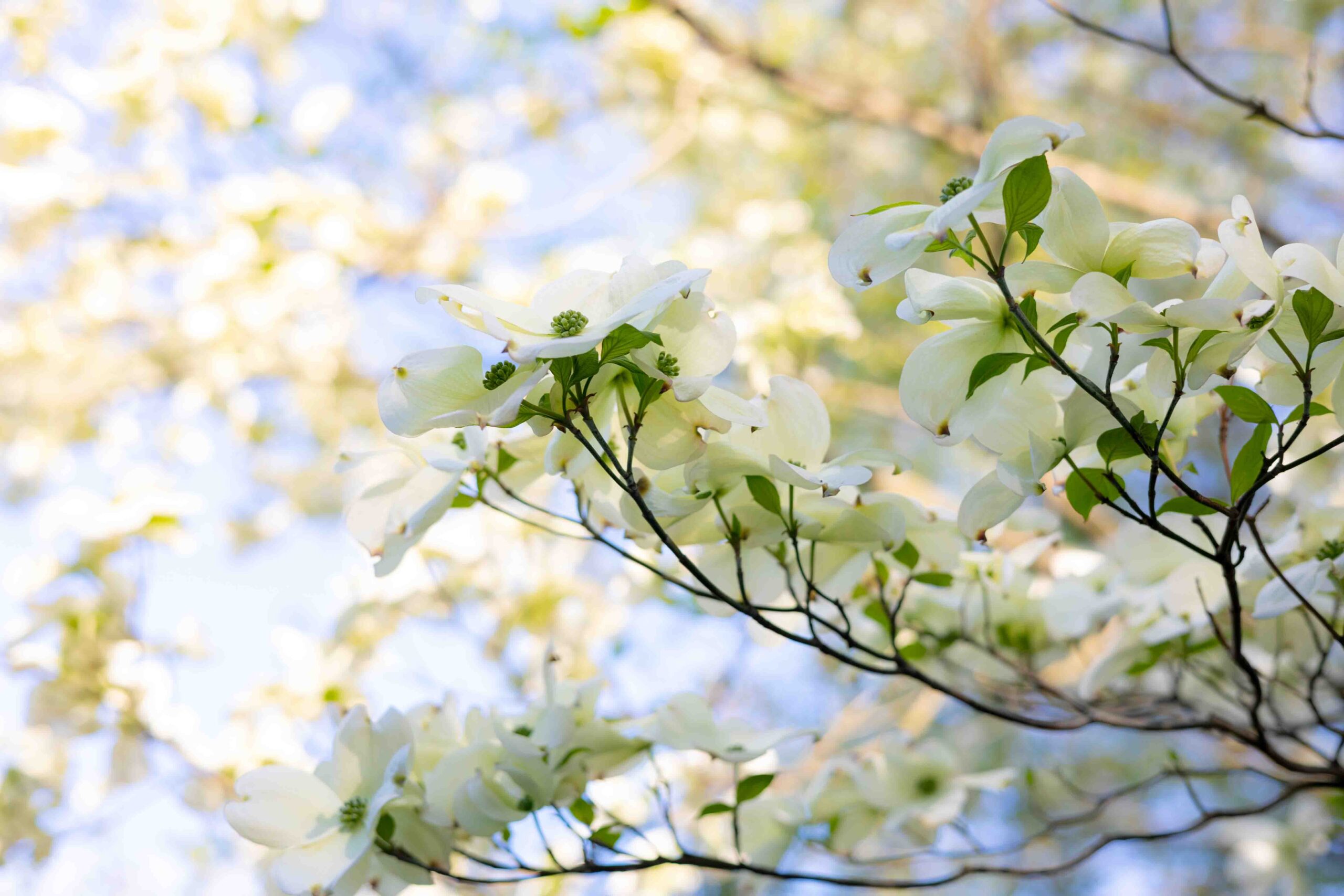
Many homeowners have smaller gardens, such as city yards or gardens at retirement communities, where space is limited. Fortunately, several native trees have a manageable mature size and are well suited to smaller planting spaces.
The flowering dogwood is an excellent choice for a smaller garden. In its native habitat, it is an understory tree, but in the garden it thrives in partial shade to full sun. This multi-season tree can eventually reach 30 feet tall with an equal spread.
In late April to early May, the tree is covered in abundant flowers surrounded by four large white bracts. Flowering is followed by shiny red fruits that provide an important food source for many native songbirds. In autumn, the foliage can turn shades of purple to brilliant red.
‘Appalachian Spring’ is a notable selection with a smaller mature size of approximately 20 feet tall and wide. It produces an abundance of white flowers and is known for its resistance to dogwood anthracnose.
Commonly called hornbeam or musclewood, Carpinus caroliniana has grown in popularity over the last 10 years because of its durability as a small to medium-sized native tree. It is often used as a small ornamental tree or street tree and can even be planted beneath power lines.
It gets the name musclewood because, over time, it develops distinctive silver-gray trunks with a sinuous, muscular appearance. Its relatively small leaves turn bright golden yellow in the fall.
American hornbeam is adaptable to urban conditions and tolerates many soil types, including poorly drained soils and wet areas of the garden. ‘Firespire’ is an upright selection that reaches approximately 20 feet tall and 10 feet wide and develops attractive red-orange fall color.
The American fringetree is noted for its delicate, lacy white flowers, which are fragrant and appear in May. It can be grown as a large, multi-stemmed shrub or pruned when young to develop a more upright tree form.
Its large leaves turn yellow in the fall. Female plants produce plump, olive-like fruits that provide food for several native bird species, including the American Robin, Eastern Bluebird, Wood Thrush, Blue Jay, and Northern Cardinal.
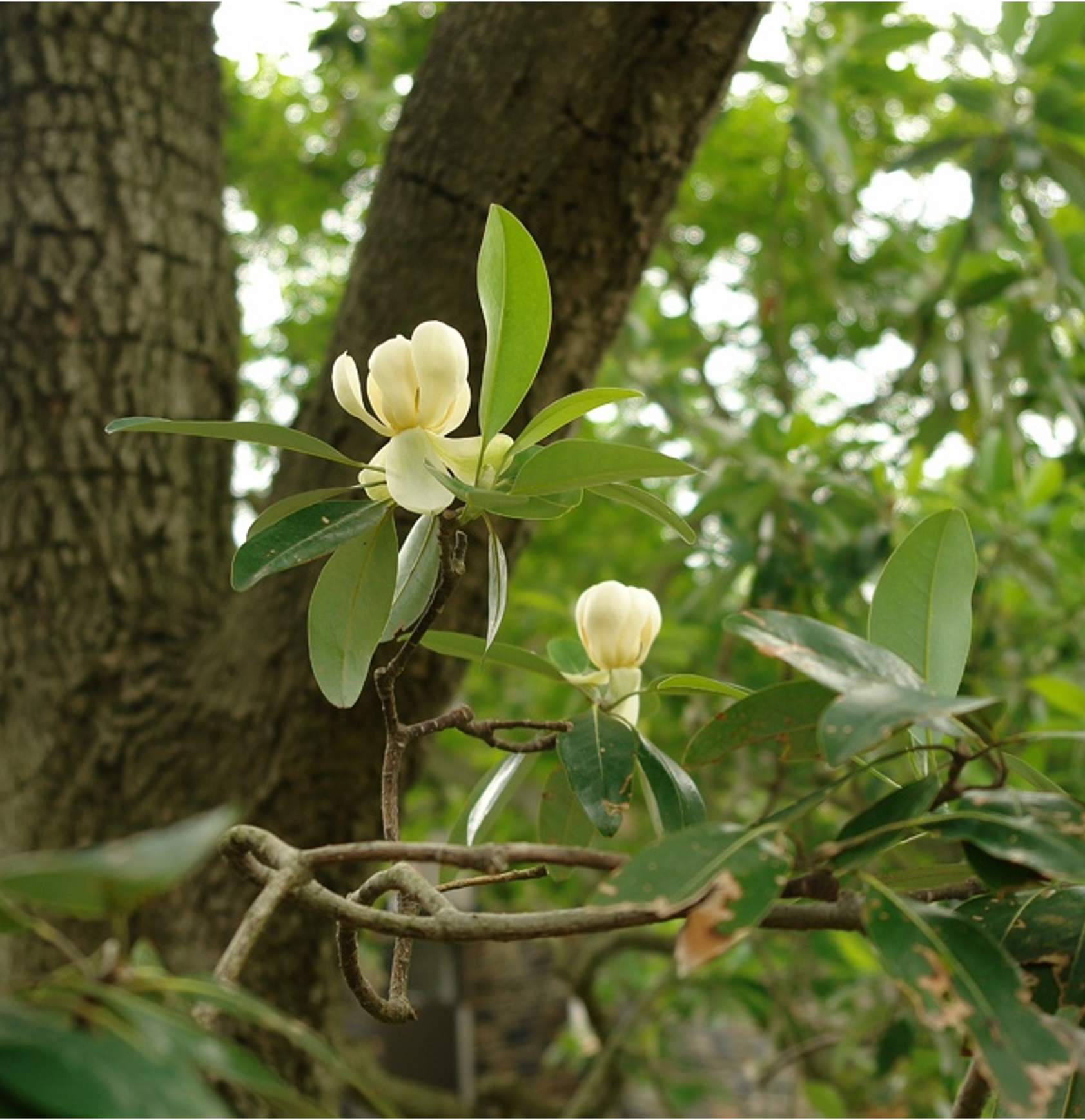
Native flowering trees provide seasonal color while also offering important resources for pollinators and other wildlife. Several excellent choices bring beautiful spring and summer flowers to the home garden.
One of the best native flowering trees is the yellowwood. In recent years, it has increasingly been used as a medium-sized street tree because of its urban resilience.
At maturity, this vase-shaped tree can reach up to 50 feet tall. Over time, its bark becomes increasingly attractive, developing a smooth, ornamental gray appearance.
In May, yellowwood produces large clusters of pendant, fragrant white flowers. Flowering is best in full sun.
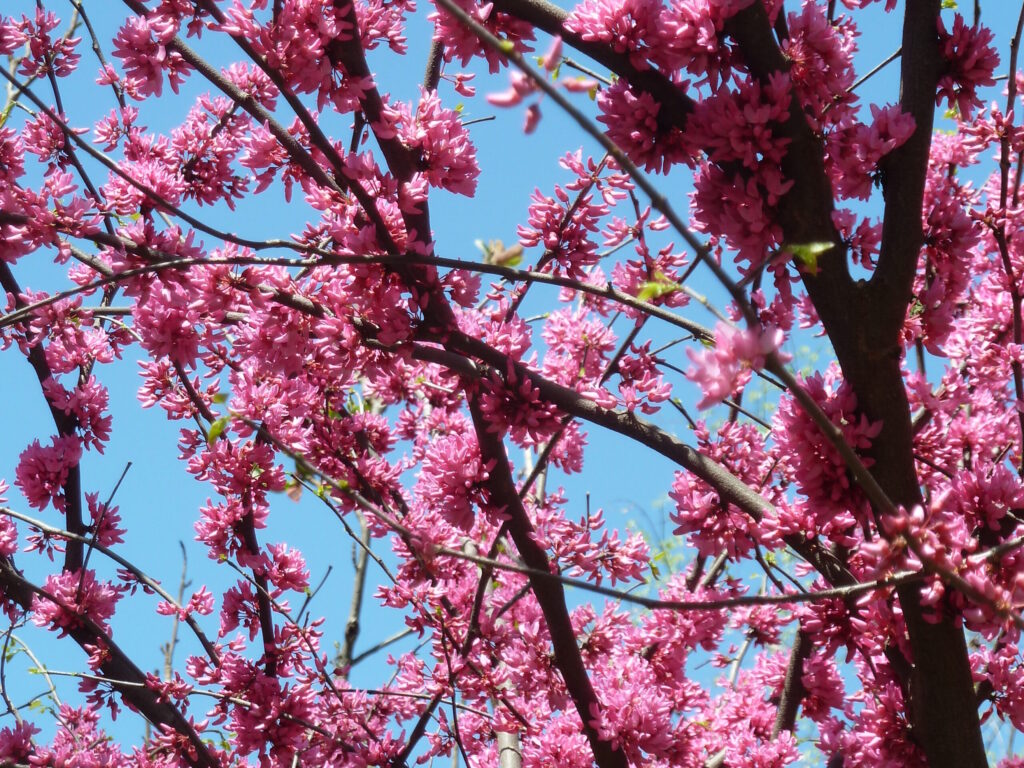
Eastern redbuds have experienced a real renaissance in popularity in the home garden over the last 15 years. This broad-spreading, medium-sized tree can reach 20 to 25 feet tall at maturity, with an equal spread.
Redbuds flower equally well in full sun to nearly full shade. Before the leaves emerge in spring, their stems become covered in magenta-pink, pea-like flowers. They are an important early-flowering tree for pollinators, and leafcutter bees also feed on their leaves.
There are many interesting redbud selections, including ‘Tennessee Pink,’ with its bubblegum-pink flowers; ‘Appalachian Red,’ with reddish-pink flowers; and ‘Alba,’ which produces white flowers.
Redbuds are also popular street trees that tolerate a variety of soil conditions, including wet soils.
There are several native magnolias along the East Coast and throughout the southeastern United States. Sweetbay magnolia is found along the coastal plain, from Massachusetts south to Florida and west to Texas.
It can be grown as either a multi-stemmed or single-trunked tree. In USDA hardiness zone 7 and warmer, its glossy leaves are mostly evergreen. It is also one of the few magnolias that can tolerate standing water.
Beginning in May and continuing sporadically through the fall, sweetbay magnolia produces medium-sized flowers with a strong lemon scent. After flowering, the fruiting body, called a follicle, becomes laden with shiny red fruits that provide a good food source for many native songbirds.
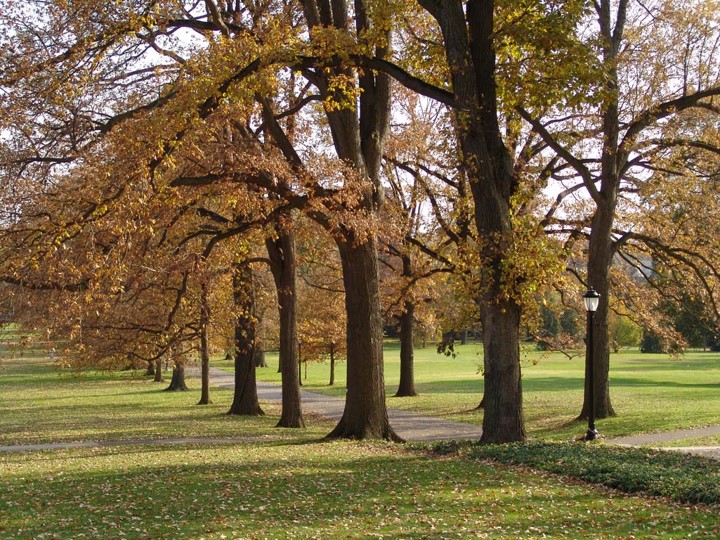
Native shade trees provide more than cooling relief and year-round beauty. Many also offer valuable food and habitat for birds, insects, and other wildlife. Oaks are especially beneficial, supporting hundreds of species and making them an excellent choice for a wildlife-friendly garden.
Environmental advocate Dr. Doug Tallamy frequently promotes oaks, especially white oak, in his lectures and books. According to Tallamy, a single white oak can support more than 500 species of mammals, birds, and insects.
Many types of insect larvae live in the canopy of oak trees and become an important food source for wrens, chickadees, and more than two dozen species of migrating warblers.
At maturity, white oak can grow to more than 100 feet tall with an equal spread. The fall color of a mature white oak can range from orange to yellow and purple.
Closely related to white oak, swamp white oak is one of the most tolerant oak species when it comes to urban conditions. It has demonstrated remarkable resilience and is an excellent option for gardens and landscapes with challenging growing conditions.
It can tolerate both wet and dry soils, making it a versatile native shade tree.
Just across the Delaware River in New Jersey is the native post oak. Related to both white oak and swamp white oak, post oak has a native range that extends as far south as Florida and west to Texas and Kansas.
Because of its southern range, post oak is likely to have good heat and humidity tolerance and may therefore be more adaptable to climate change.
At maturity, it reaches approximately 30 to 50 feet tall and develops excellent orange fall color. Many native mammals also feed on the acorns it produces in autumn.
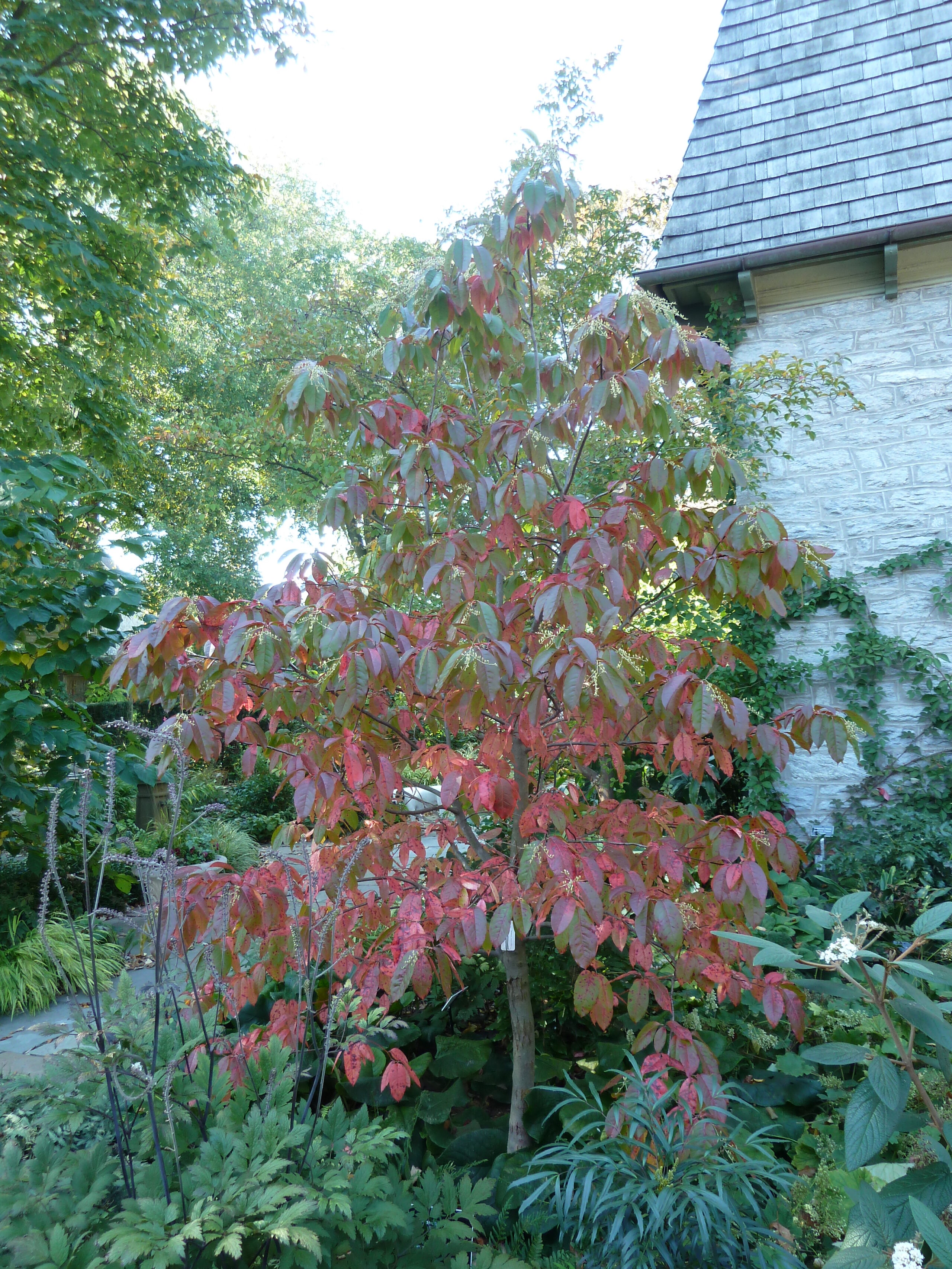
Many native trees are unequaled when it comes to fall color. Two particularly beautiful options offer exceptional seasonal interest in the home garden.
One of the very best native trees for fall color is Franklinia alatamaha, named by John Bartram for his friend and colleague Benjamin Franklin.
In late summer, this tree is covered in four-inch, white, camellia-like flowers with a prominent cluster of yellow stamens. It typically develops a multi-stemmed form and reaches approximately 30 feet tall.
In the fall, its narrow leaves turn a brilliant fire-engine red, making it an exceptional addition to the garden.
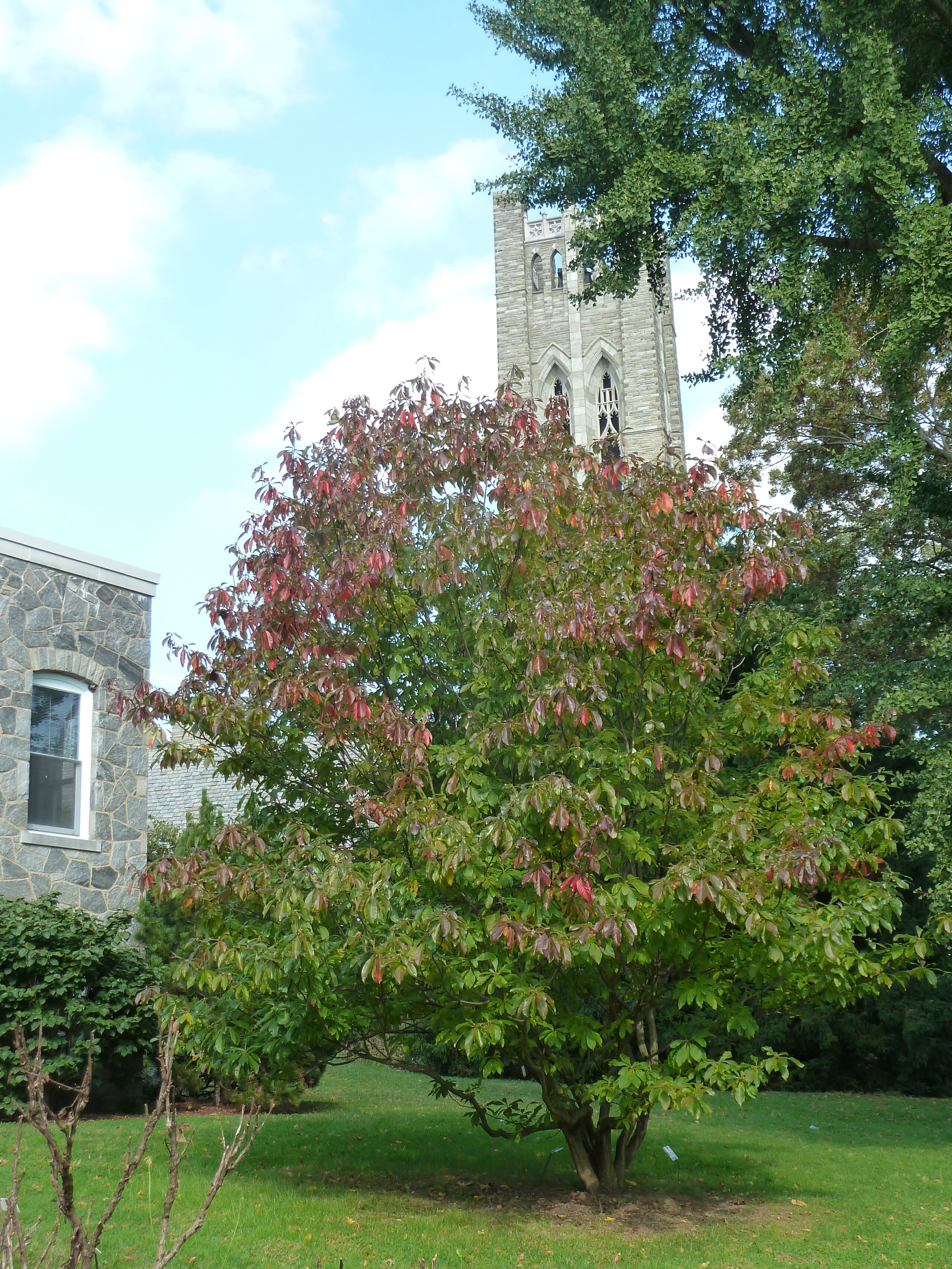
Another excellent native tree for fall color is sourwood. Heading south on I-95 into Virginia, this tree begins to appear along the sides of the highway.
In late summer, sourwood produces striking panicles of white, gooseneck-like flowers. Its fall foliage can range from crimson to orange and is always a vivid display.
The flower stalks remain white after flowering, and the contrast between the spent flowers and colorful autumn foliage adds even more seasonal interest.
There are native trees for nearly every type of garden situation. Oaks and maples are excellent choices for shade, while smaller trees such as redbuds (Cercis) and flowering dogwoods (Cornus) are ideal for smaller gardens.
Consider your garden’s soil conditions when selecting a tree. Swamp white oak can tolerate both wet and dry soils, while sweetbay magnolia and American hornbeam (Carpinus) can tolerate very wet conditions.
Light requirements are another important consideration. Many native trees thrive in full sun, while others, such as redbud, can also grow in considerable shade.
The provenance of a tree is another factor worth considering. Provenance refers to the location where the original seed was collected. For some cultivars, this information is known, and some nurseries now sell trees with documented provenance.
For example, white oak (Quercus alba) has a very broad native range, extending from the Northeast south to Alabama. In theory, a tree grown from seed collected in a more northern location is likely to have greater cold tolerance, while one grown from southern seed sources may have greater heat and humidity tolerance.
These factors are increasingly being considered as a way to help trees adapt to changing climate conditions.
Like other trees, native trees benefit from proper planting and basic care to help them become established.
There are seemingly endless choices of excellent native trees for the home garden. The key is to select a tree that suits your site and has enough room to reach its mature size.
Whether you are looking for spring flowers, attractive fruit, fall color, winter interest, or ecological benefits, there is likely a native tree that will meet your needs.
Visiting local botanic gardens and arboreta is a wonderful way to research native trees and see how different species grow in the landscape. With the right selection, a native tree can bring beauty and support local wildlife for generations.